№ 000

kosmophysis
One card of astronomy.
Claude by Anthropic and Raffaele Battaglia
Then another. Until you've seen the sky in pieces small enough to hold.
swipe to begin
Claude by Anthropic and Raffaele Battaglia
Then another. Until you've seen the sky in pieces small enough to hold.
 NASA · ESA · Hubble Heritage Team (STScI/AURA)
How a pulsating star became the ruler of the universe.
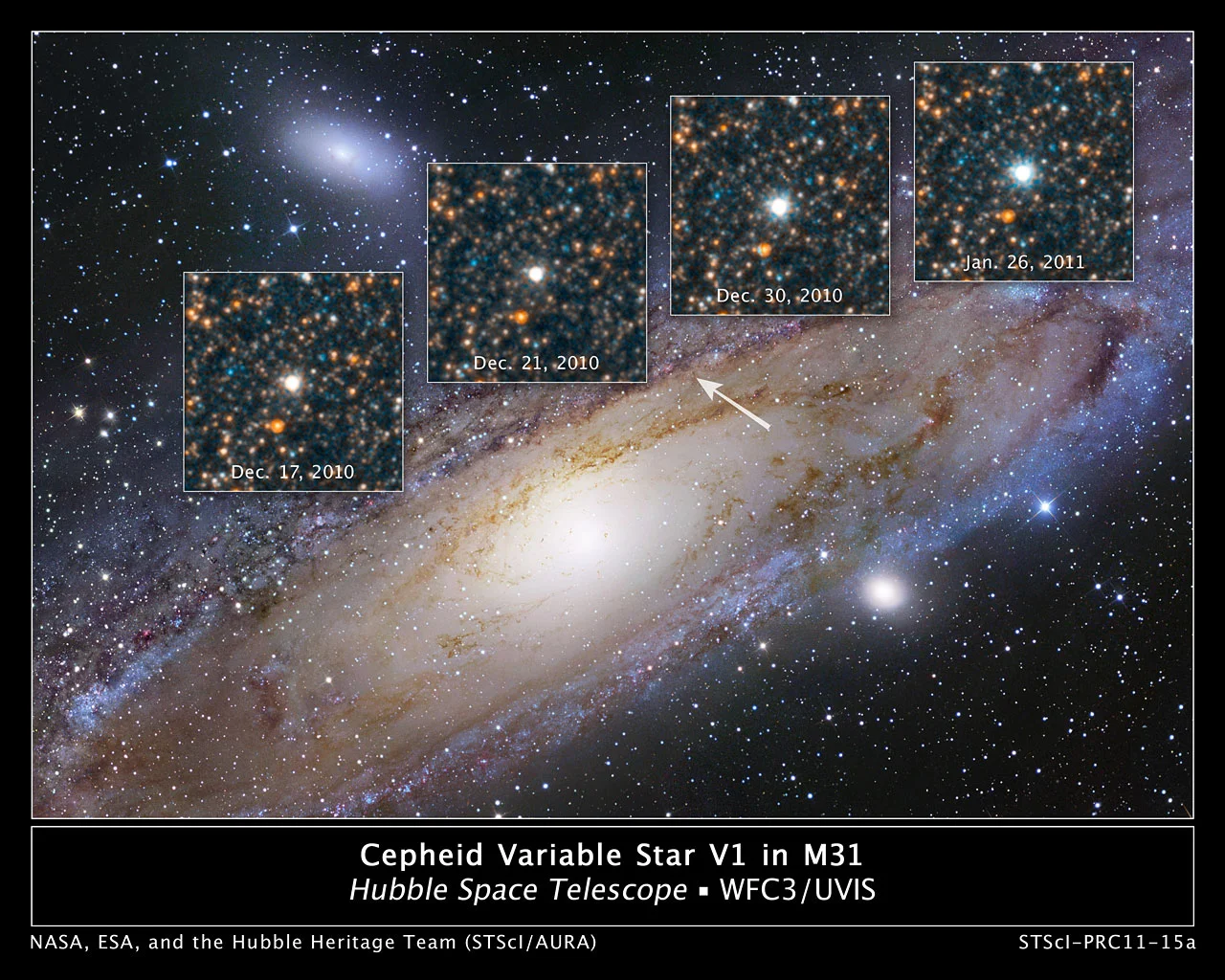
Some stars do not shine steadily. They swell and contract on a clockwork rhythm — and the rhythm itself, it turns out, tells us how far away they are.
Cepheid variables are luminous yellow supergiants that pulsate radially with periods ranging from about a day to several months. The mechanism is a heat engine driven by partially ionized helium in their outer envelope, which alternately traps and releases the radiation flowing up from the core. Because their intrinsic luminosity scales tightly with the pulsation period — a relation first measured by Henrietta Swan Leavitt in 1912 — the rhythm of a Cepheid reveals its true brightness, and comparing that to its apparent brightness gives its distance. They remain the foundational rung of the cosmic distance ladder, the standard candles that first showed the universe was made of galaxies.
A Cepheid pulsating once every 30 days is roughly 10,000 times brighter than the Sun — luminosity that scales directly with the rhythm of the breath.
 NASA · GSFC · Arizona State University · Smithsonian
Its interior is still cooling — and its crust is still breaking.
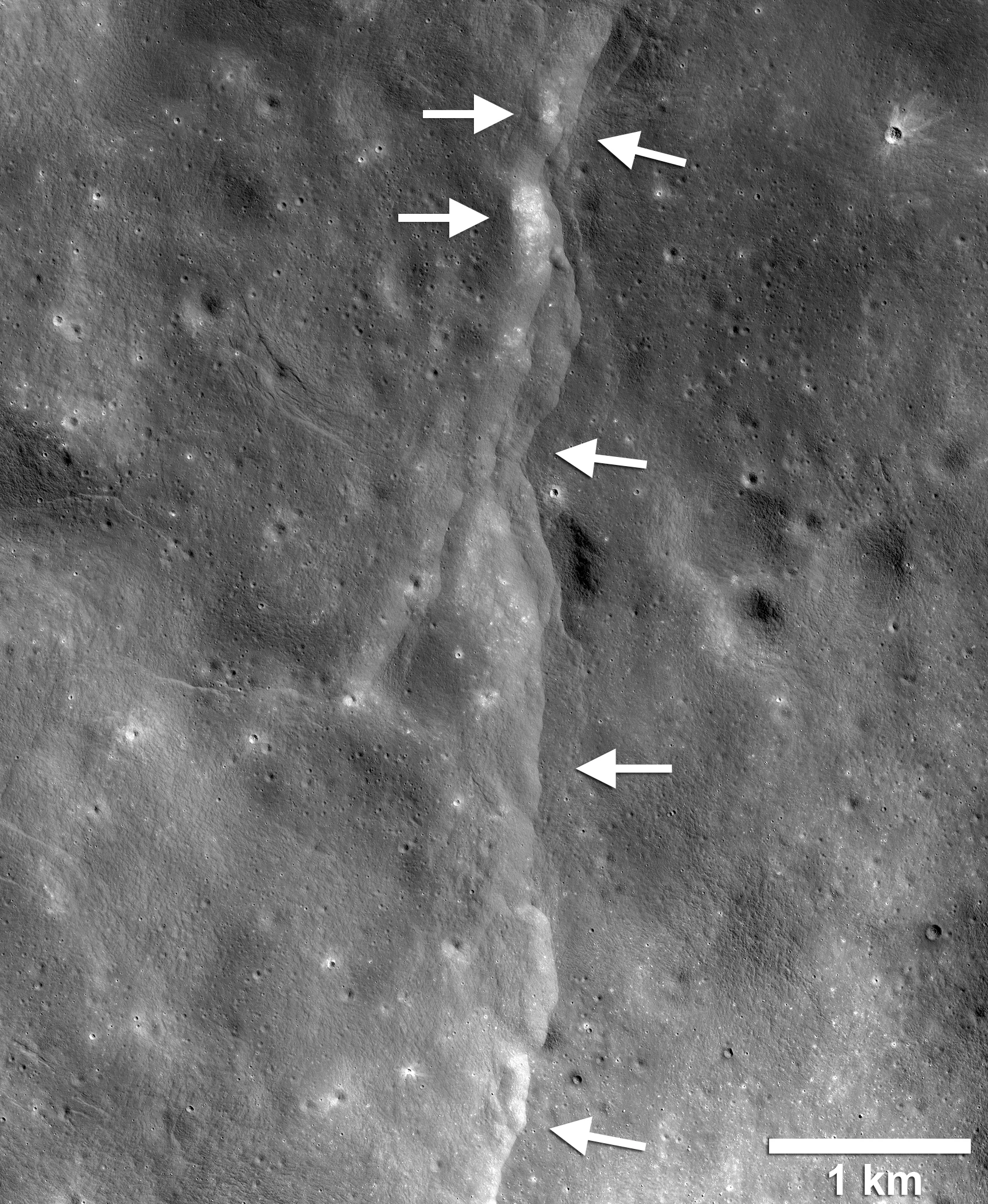
The Moon looks geologically dead. Its crust says otherwise.
As the lunar interior continues to cool, the whole body contracts, and its rigid crust breaks. The Lunar Reconnaissance Orbiter has imaged more than three thousand young thrust-fault scarps scattered across the surface — the visible expression of that slow shrinkage. Reanalysis of the Apollo-era seismic record, published in 2019, places eight of the 28 known shallow moonquakes within thirty kilometres of those scarps, six of them near apogee, when tidal stress from Earth is at maximum compression. The Moon is tectonically active. Its radius is roughly fifty metres smaller than it was a few hundred million years ago.
Apollo seismometers recorded 28 shallow moonquakes between 1969 and 1977. Some were as strong as magnitude 5.
 NASA · JPL-Caltech
Clocks in motion, watched by clocks — and sometimes, mid-experiment, the clock turns away.
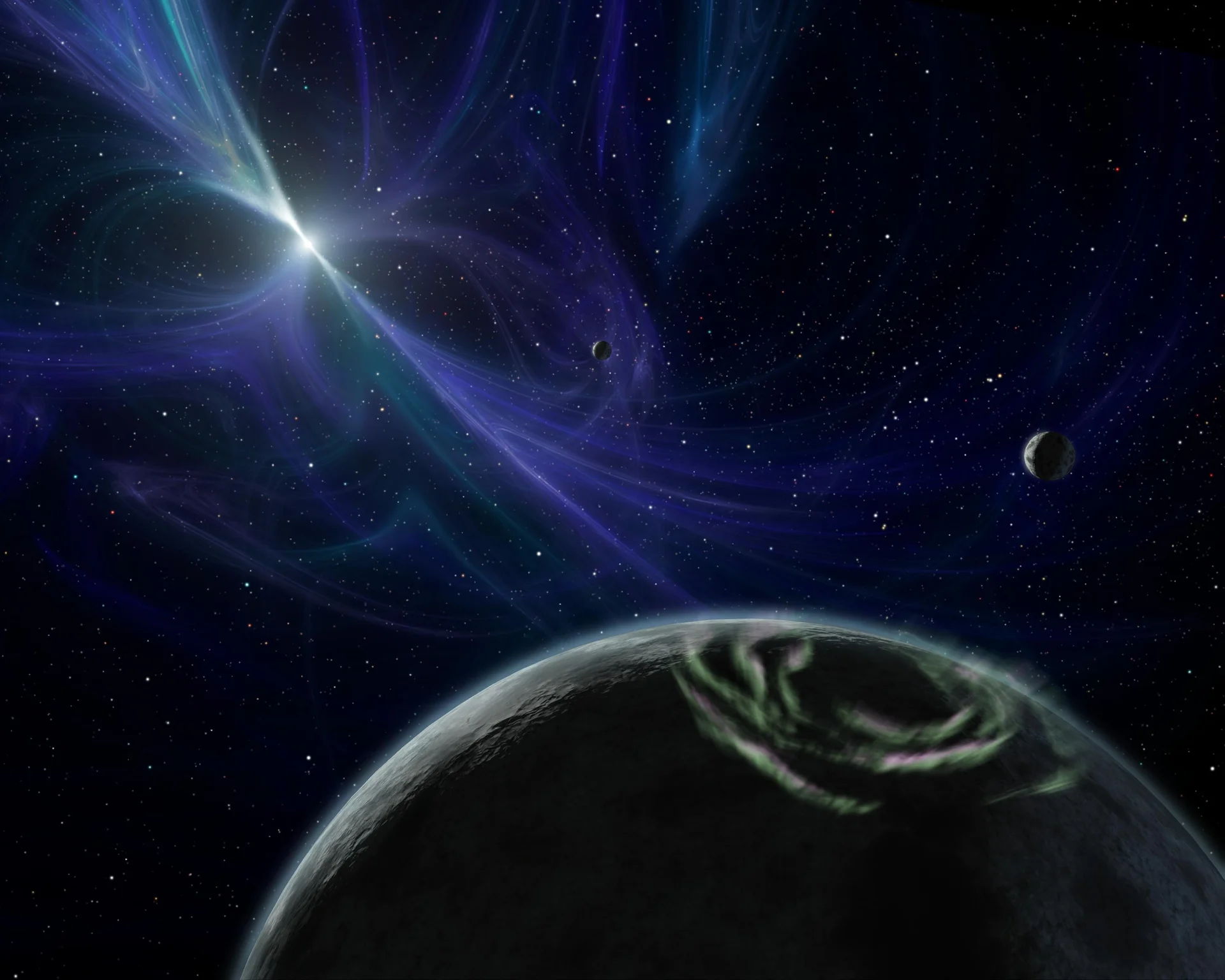
A pulsar locked in orbit with another compact body becomes a moving timepiece whose ticks can be tracked to nanoseconds. That precision is what makes binary pulsars the most demanding laboratory we have for gravity — and what occasionally reveals that one of them has stopped pointing at us.
Binary pulsars are systems where a neutron star emitting pulsed radio waves orbits a companion: another neutron star, a white dwarf, or — rarely — main-sequence matter or planets. Their pulse-arrival times encode the orbit with extraordinary fidelity, allowing strong-field tests of general relativity, mass measurements of dense matter, and the observable rotation of the pulsar beam in and out of line of sight. The unique double pulsar PSR J0737−3039 has yielded seven independent post-Keplerian parameters; one of its two pulsars has been undetectable since March 2008 and is expected to return around 2035. A separate hierarchical triple, PSR J0337+1715, currently provides the tightest test of the strong equivalence principle ever made. The first confirmed exoplanets orbit a millisecond pulsar.
PSR J0737−3039 loses about 7 mm of orbital separation per day to gravitational-wave emission — a prediction of general relativity confirmed to 0.013%.
 NASA/JPL-Caltech
The planet that was found with the point of a pen.
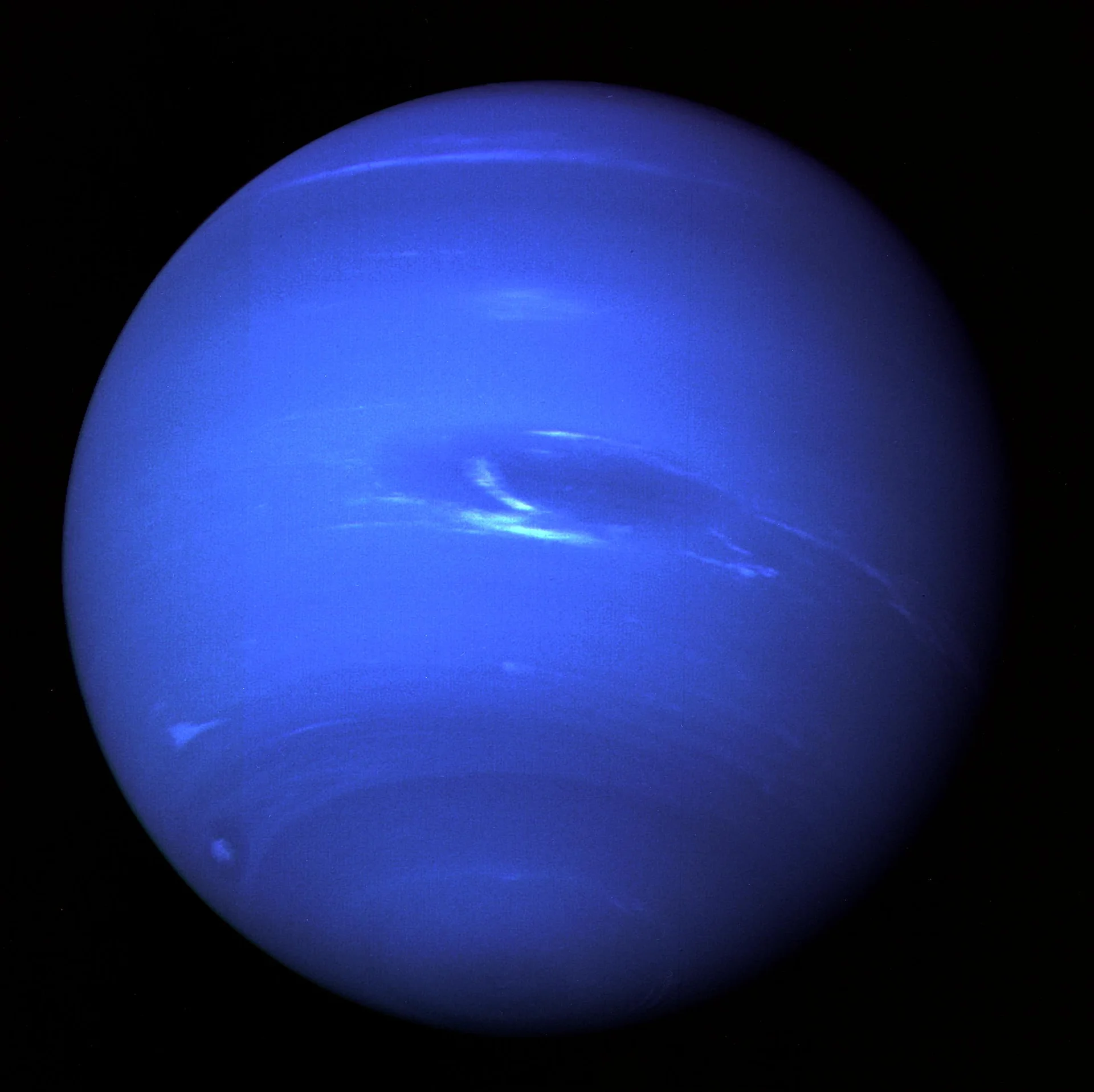
In the summer of 1846, a French mathematician who had never looked through a telescope wrote a letter to Berlin, telling a German astronomer exactly where to point one. That night, a new planet appeared — within one degree of the predicted position. It was the first world in history discovered not by sight, but by pure mathematics.
Neptune was the first planet whose existence was deduced before it was observed. In the 1840s, the orbit of Uranus refused to obey Newton’s laws — it was drifting, subtly but persistently, from its predicted path. Working independently, Urbain Le Verrier in Paris and John Couch Adams in Cambridge concluded that an unseen planet must be pulling it off course, and both calculated where that planet should be. On the night of 23 September 1846, Johann Galle at the Berlin Observatory found it after less than an hour of searching, almost exactly where Le Verrier had said. When Voyager 2 flew past in 1989 — the only spacecraft ever to visit — it revealed a world of violent contradictions: the fastest winds in the solar system on the coldest major planet, a magnetic field tilted almost sideways, and a moon orbiting the wrong way. More than 175 years after its discovery, Neptune remains the least understood planet in our solar system.
Neptune radiates 2.6 times more energy than it receives from the Sun. No one is entirely certain why.
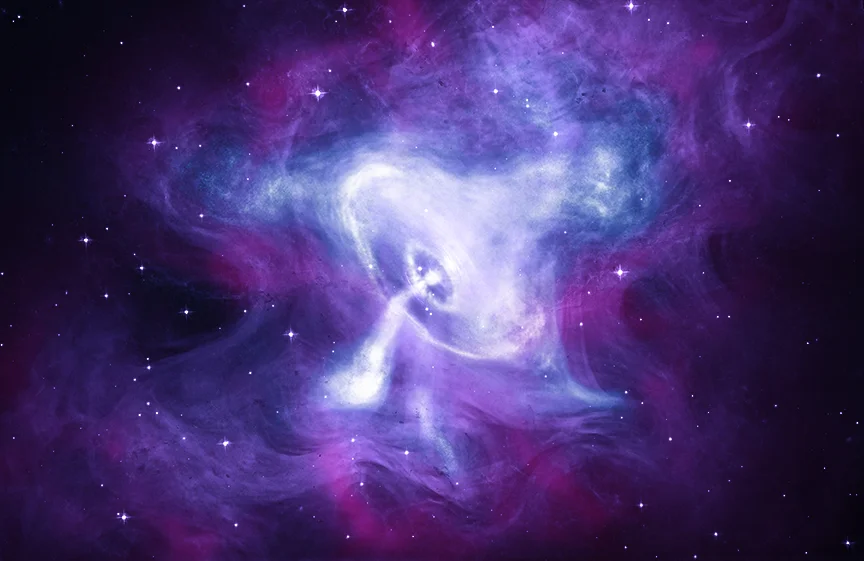 NASA/CXC/SAO · NASA/STScI · NASA/JPL-Caltech
A signal that should not have existed.
In the summer of 1967, a twenty-four-year-old graduate student in Cambridge found a rhythm buried in the radio noise — sharp, cold, perfectly repeating every 1.337 seconds. For weeks, no one could explain it. They half-jokingly labelled it LGM-1: Little Green Men.
Pulsars are rapidly rotating neutron stars that sweep beams of electromagnetic radiation across space like cosmic lighthouses. The first was discovered by Jocelyn Bell Burnell while analysing data for her doctoral thesis at Cambridge — a signal so bewilderingly regular it was briefly considered artificial. The explanation, proposed months later by Thomas Gold, was stranger than aliens: a collapsed stellar core, roughly ten kilometres wide, spinning on its axis and channelling radiation into narrow beams along its magnetic poles. Today, over 3,700 pulsars are catalogued. The most stable among them keep time better than atomic clocks, and arrays of dozens are now used to detect gravitational waves rippling through the fabric of spacetime itself.
The Crab Nebula pulsar completes 30 full rotations every second — each one sweeping a beam of radiation past the Earth with the regularity of a laboratory oscillator.
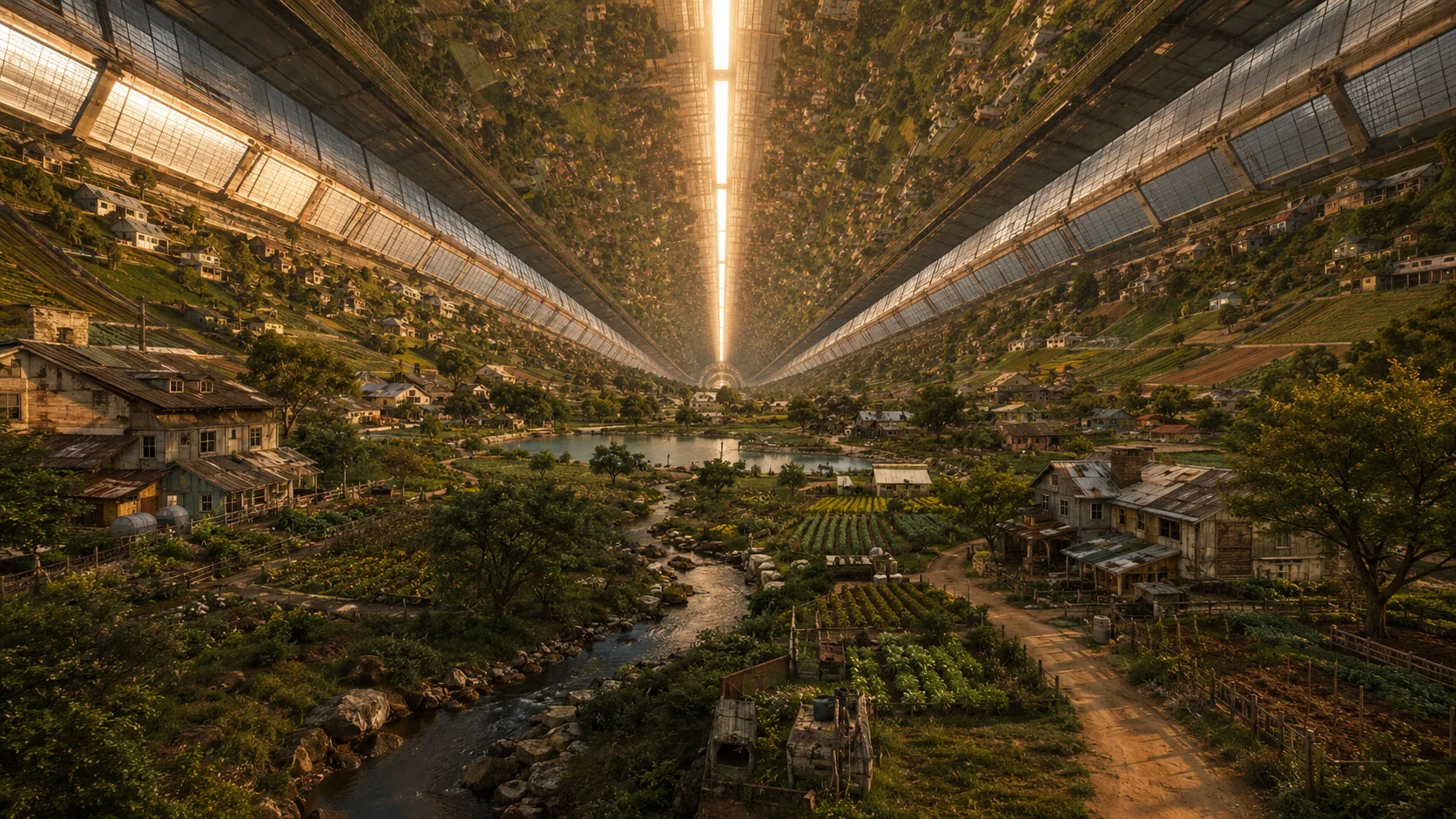 Raffaele Battaglia — generated with GPT Image 2 (OpenAI), 2026 — artist's impression, conceptually plausible, not to scale.
What an interstellar voyage would actually require, with the technology we have today.
It is not a hypothetical that has aged badly. The nearest other star is 4.24 light-years away, and the question of how long the trip would take, with what we actually have, returns an answer that almost no fiction has been honest about.
A crewed mission to another star, designed under present engineering constraints, is not a piloting problem but a generation-ship one. Chemical and ion drives reach hundredths of a percent the speed of light; only nuclear-pulse concepts like Project Orion, designed in the 1950s and forbidden since 1963, could push a vehicle above 1% c. At that velocity Proxima Centauri sits more than four centuries away — and propulsion turns out to be the easier of two problems. The harder is closure: a sealed ecosystem and a viable founder population that survive those centuries on hardware nobody has built and a biosphere nobody has demonstrated.
Voyager 1, humanity's fastest interstellar craft, would need roughly 75,000 years to drift to Proxima Centauri.
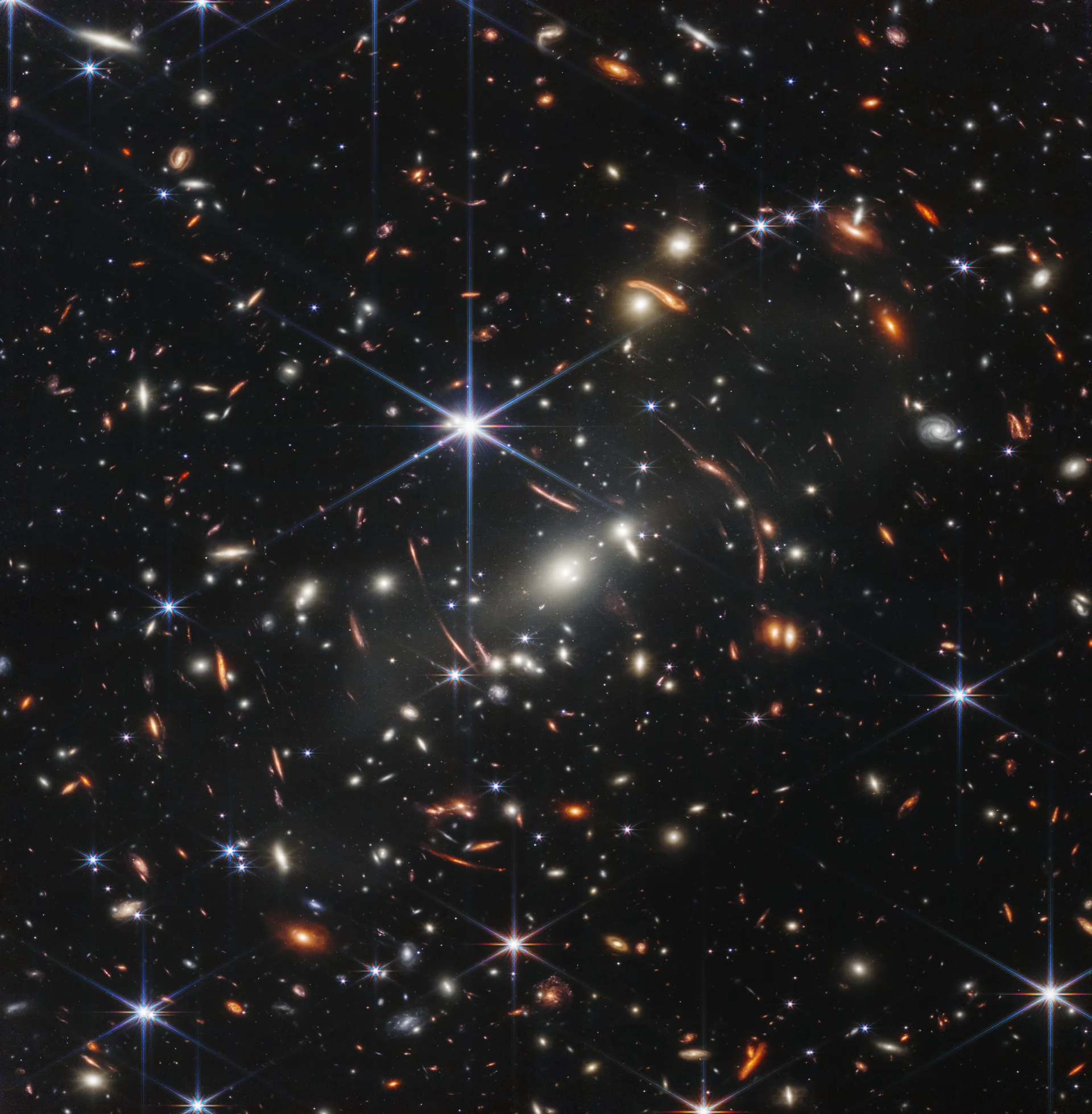 NASA · ESA · CSA · STScI
Astronomy is the only science that cannot observe the present.
Every photon that reaches a telescope is news from a moment that has already ended. The further the source, the older the news — and the more the universe in front of us is no longer there.
The finite speed of light makes astronomical distance and time inseparable. The Sun we observe is eight minutes old; the nearest star, four years; Andromeda, two and a half million. Every catalog is implicitly a chronology, and every deep image is a vertical core sample through cosmic history. At the limit, the cosmic microwave background reaches us as fossil radiation from when the universe was 380,000 years old. Beyond that, no light has had time to arrive — and a great deal of it never will.
Andromeda's light takes 2.5 million years to reach Earth — older than our species.
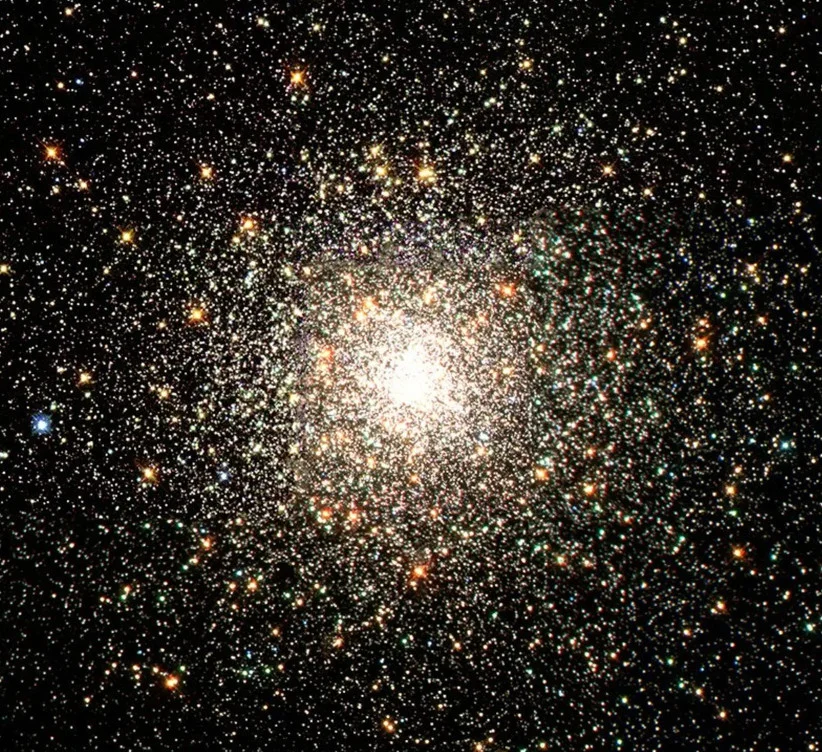 The Hubble Heritage Team (AURA/STScI/NASA)
When stars meet — violently.
A direct hit between two stars is exceedingly rare in the disc of the Galaxy. In the dense cores of globular clusters, it is routine.
James Jeans calculated in the early twentieth century that no Sun-like star in the Galactic disc has ever experienced a direct stellar collision — the distances are simply too vast. Inside globular clusters, however, where hundreds of thousands of stars crowd into a region that elsewhere would hold only a few hundred, the probability rises by four orders of magnitude. The 1970 Uhuru satellite found 10% of bright X-ray sources concentrated in clusters that contain only 0.04% of the Galaxy’s stars — the first observational confirmation. When two stars merge, mixing fresh hydrogen into the core, the product appears blue and rejuvenated — a blue straggler, a star that should have died but somehow looks young.
Studies suggest that up to 50 % of the stars in the densest globular clusters may have experienced at least one close encounter over the past 13 billion years.
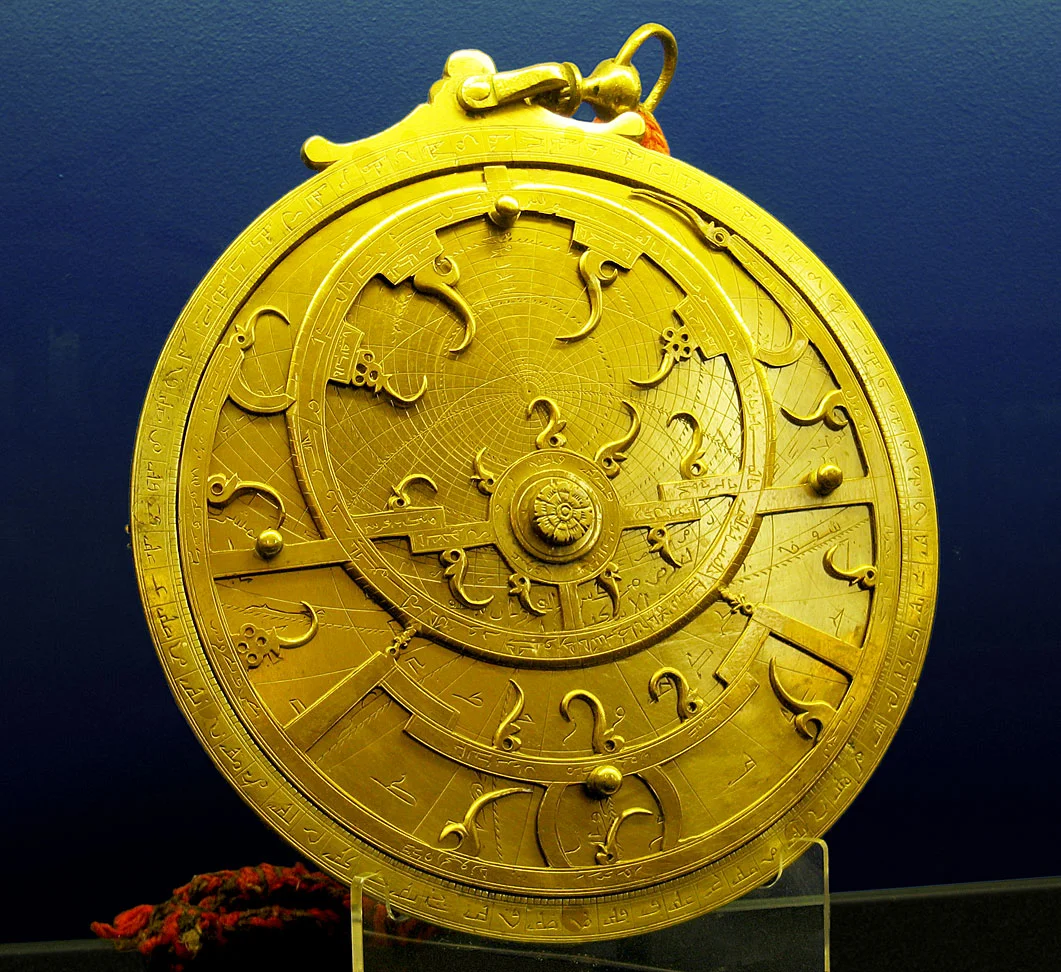 Andrew Dunn · Wikimedia Commons · CC BY-SA 2.0
The Renaissance computer that fitted in the palm of your hand.
Before there were watches, before there were sextants, there was an instrument that told you the time, your latitude, the position of the stars, and — if you were Muslim — the direction of Mecca. It fit in the palm of your hand.
The astrolabe is a planar projection of the celestial sphere onto a brass disc, distilling the geometry of an armillary sphere into a hand-held instrument. Its theoretical basis was laid by Hipparchus around 180 BC; Ptolemy elaborated it; the earliest surviving examples are tenth-century artefacts from the Islamic world, where the demand to find the qibla — the direction of Mecca — drove its diffusion. The European golden age stretched from the fourteenth to the sixteenth century, when Gemma Frisius, Erasmus Habermel, and Georg Hartmann turned mathematical theory into objects of irreducible artistry. Its four parts — mater, tympanum, rete, alidade — together solve dozens of astronomical problems.
The rete of a large astrolabe could encode the positions of up to sixty stars, all projected onto a single brass disc.
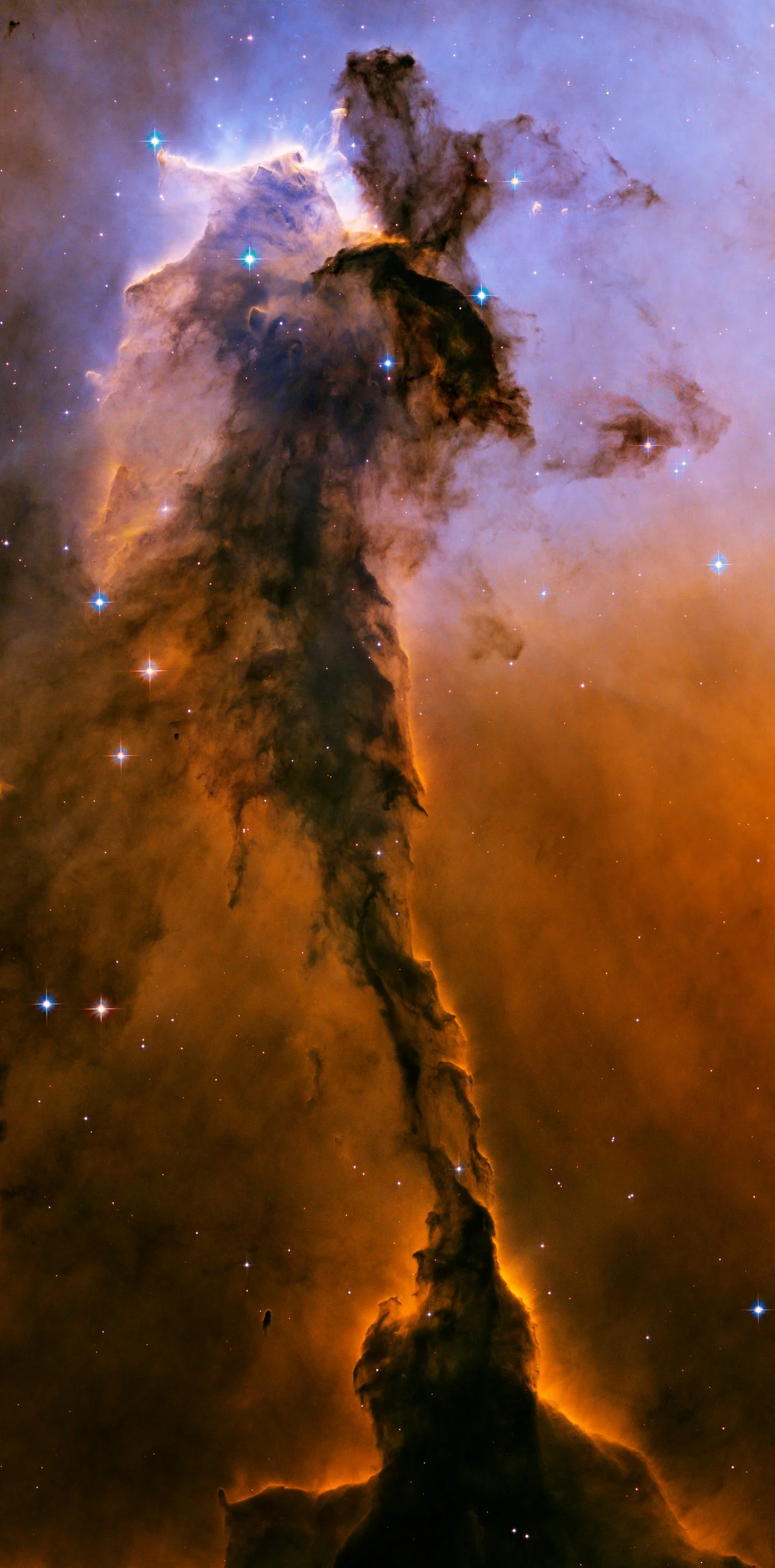 NASA, ESA, and The Hubble Heritage Team (STScI/AURA)
Stellar nurseries written in cold hydrogen and dust.
Most of interstellar space is too hot and too sparse for atoms to ever meet. But cold, dense pockets exist — and that is where stars come from.
Giant molecular clouds — GMCs — are the coldest, densest regions of the interstellar medium, with temperatures near 10 K and densities up to 60 million molecules per cubic centimetre in their cores (still 100 billion times more rarefied than sea-level air). They earn the giant designation when they exceed 100,000 solar masses, and a typical spiral galaxy contains one to two thousand of them. Inside their cores, gravitational collapse ignites new stars; in the Eagle Nebula’s iconic elephant trunks, that process has been visible mid-creation since Hubble’s 1995 image. In interacting galaxies, the violent compression of GMCs can produce starburst events that form hundreds of thousands of stars in a single episode.
The densest cores of a giant molecular cloud can reach 60 million molecules per cubic centimetre — yet this gas remains 100 billion times more rarefied than the air we breathe at sea level.
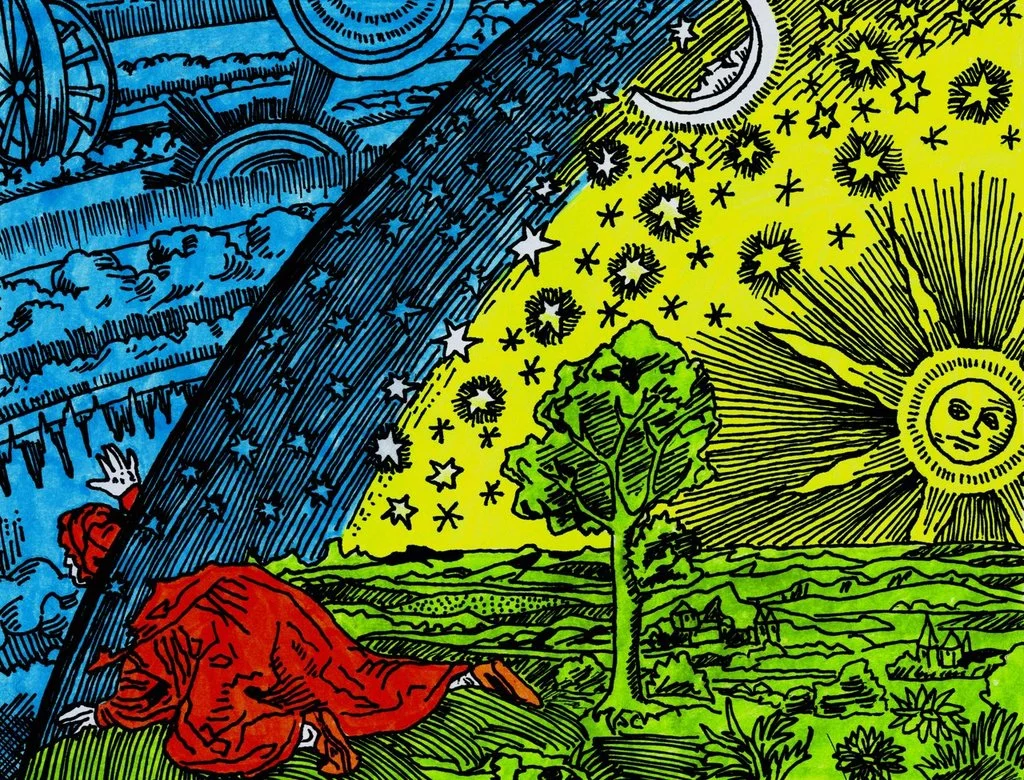 Camille Flammarion, L'Atmosphere: Météorologie Populaire (Paris, 1888), pp. 163
When medieval astronomers reached for the edge of everything.
Aristotle insisted the universe ended somewhere. His medieval inheritors tried to imagine reaching past that end — and the question reshaped physics.
For Aristotle and his Ptolemaic inheritors, the universe was finite and bounded by the sphere of the fixed stars; beyond it there existed neither space, nor void, nor time. Medieval cosmologists pursued the thought experiment of a man stretching his arm past that sphere and asked, with theological seriousness, whether his hand would still be somewhere. The debate could not produce empirical answers but it forced a conceptual rupture: from Aristotelian place — a body’s natural location — to absolute space, a three-dimensional empty Euclidean container, later inherited by Newtonian physics. In 1917 Einstein replaced that container with something flexible and dynamic — and the medieval question became modern cosmology.
Aristotle held that beyond the outermost sphere there existed neither space, nor void, nor time — only a nature that occupies no place and is subject to no temporal flow.
 NASA
NASA
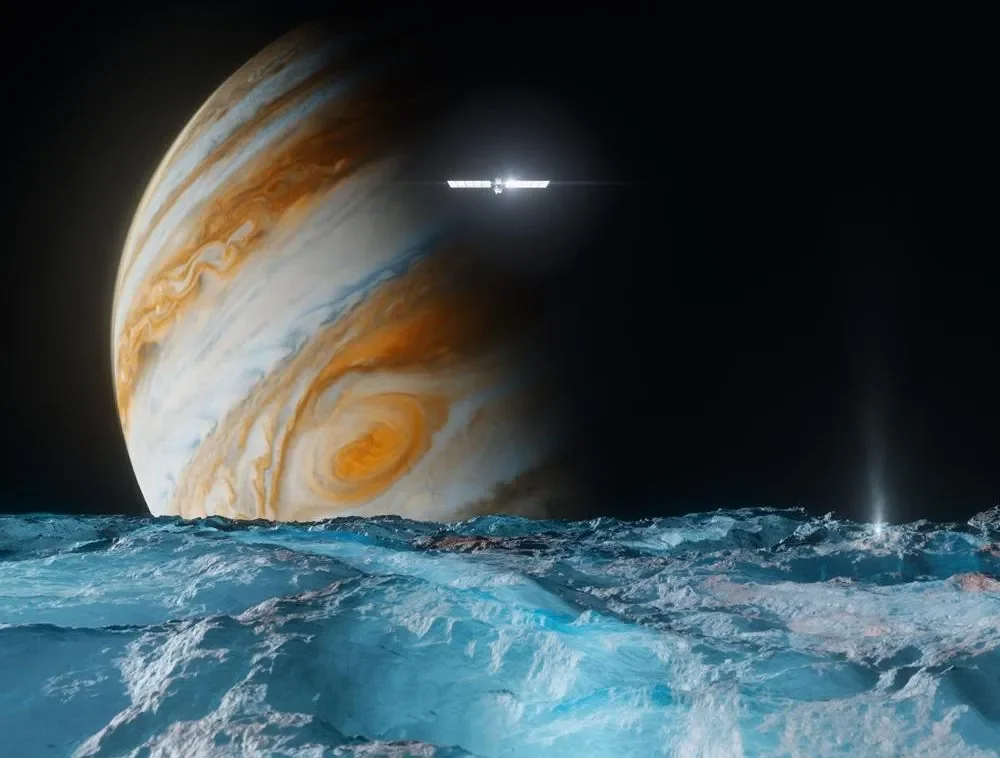
Beneath the ice, an entire hydrosphere waits in silence.
The four points of light beside Jupiter, easily seen with binoculars, are not stars. Beneath the ice of at least one of them, an ocean is waiting.
The Galileo spacecraft, in orbit around Jupiter from 1995 to 2003, transformed our view of the four Galilean moons. Europa’s magnetometer detected induced electric currents consistent with a global salty ocean tens of kilometres deep, kept liquid by tidal heating from the orbital resonance with Io and Ganymede. Ganymede — the largest moon in the solar system — shows evidence of an internal ocean sandwiched between layers of ice at different pressures. Callisto may host one too. Europa’s hidden ocean alone may contain twice the volume of all Earth’s oceans and is now the most promising address in the solar system for life beyond our planet.
Europa's subsurface ocean may contain twice the volume of all Earth's oceans combined, locked beneath an ice shell only 10–30 km thick.
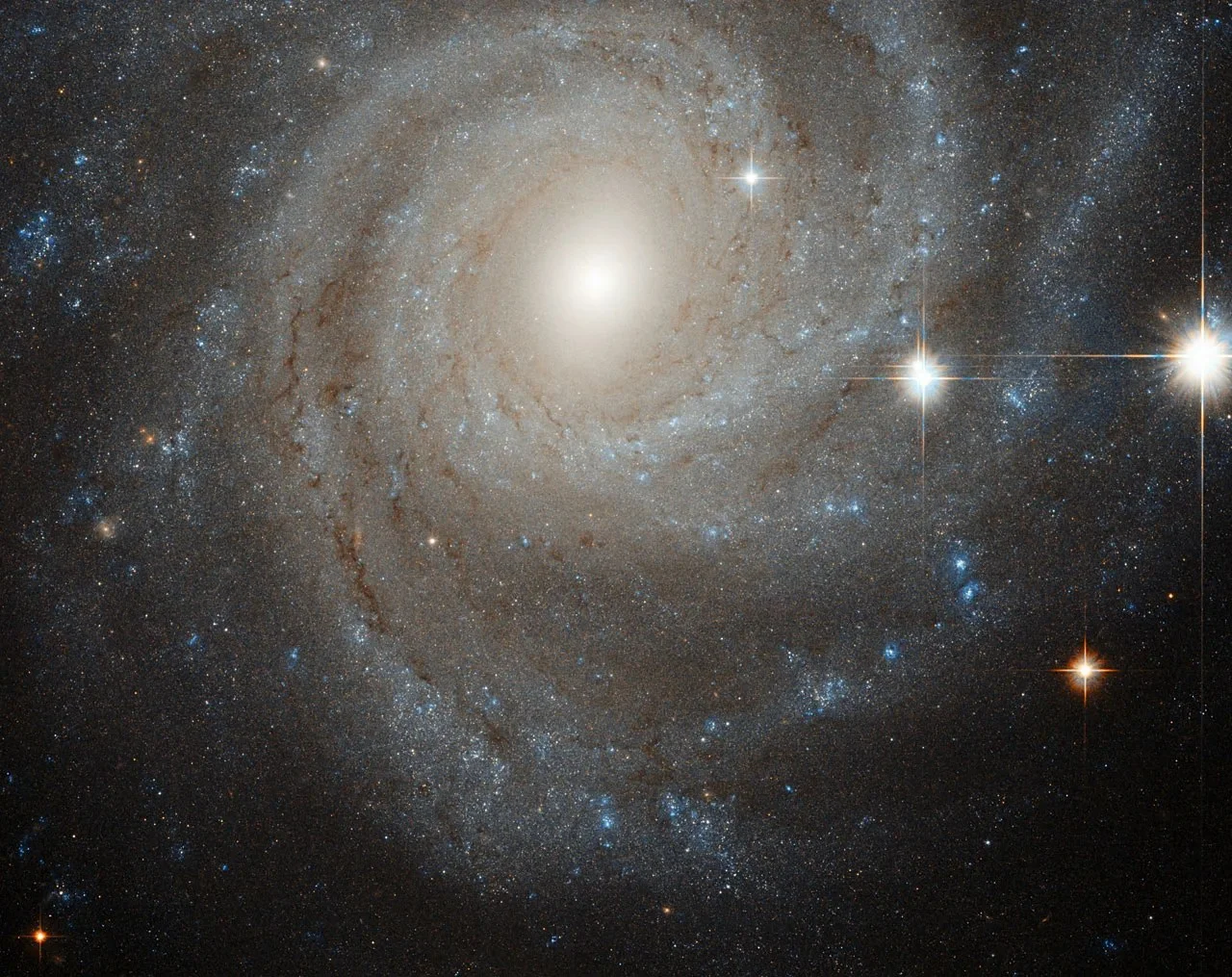 ESA/Hubble & NASA
A field guide to the shapes of galaxies.
The first time someone tried to put galaxies in alphabetical order was 1926. The order has changed remarkably little since.
Edwin Hubble’s 1926 morphological classification — the so-called tuning fork diagram — divides galaxies into ellipticals (designated E0 to E7 by apparent flattening), spirals (S/SB, normal or barred, subdivided by arm tightness), lenticulars (the intermediate class), and irregulars. The criteria are purely descriptive and based on photographic plates, yet they remain the foundation of extragalactic taxonomy a century later. We now know that every major galaxy harbours a supermassive black hole, that dark matter haloes extend far beyond the luminous disc, and that mergers reshape morphology over cosmic time. The pinwheels still dominate the census: roughly 61 of every 100 galaxies surveyed are spirals.
Of every 100 galaxies surveyed, roughly 61 are spirals, 22 lenticulars, 13 ellipticals, and 4 irregulars — the pinwheels dominate the cosmic census.
 NASA
NASA
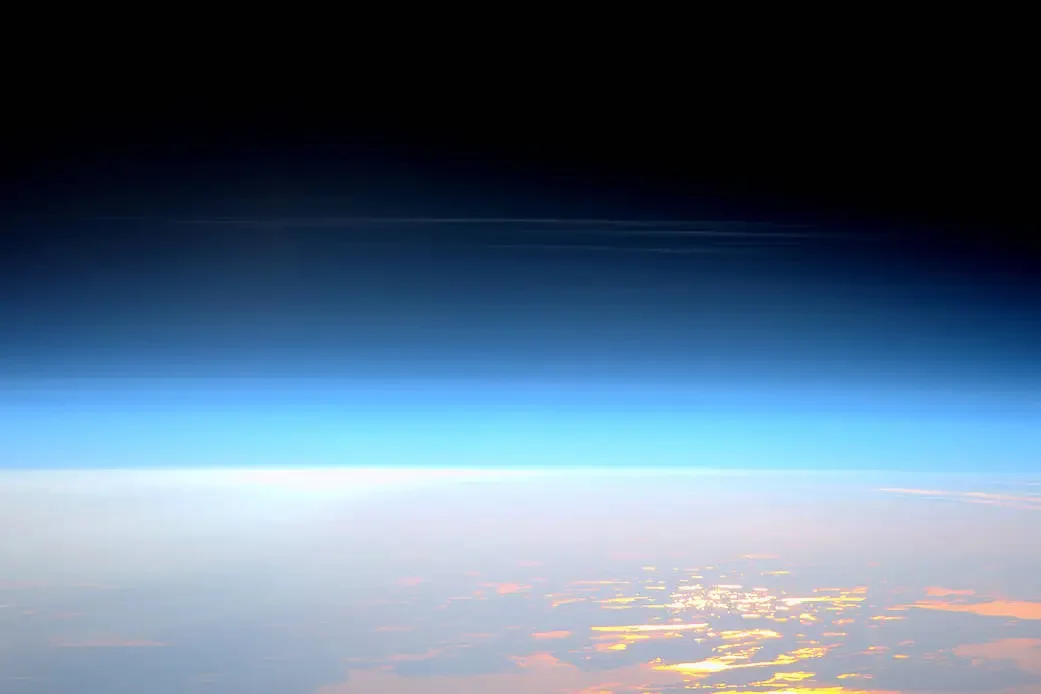
Ice crystals at the edge of space, glowing after sunset.
There is a kind of cloud you can only see when the Sun has already set on you but is still rising on it. Eighty kilometres up, in air drier than any desert, ice has somehow learned to form.
Noctilucent clouds form between 80 and 85 km altitude in the mesosphere — the coldest, driest layer of the atmosphere — from ice crystals comparable in size to particles of cigarette smoke. They are visible only during summer twilight at high latitudes (50°–60° N is optimal), when the Sun has set for the observer but still illuminates the upper atmosphere from below, scattering an ethereal silver-blue glow. How water vapour reaches such altitudes, and what nucleation sites — possibly meteoric dust — allow it to crystallise in air a hundred million times drier than the Sahara, remains an open research question. Their increasing frequency over the past century has been linked to climate change.
Noctilucent clouds form at 80–85 km altitude in the mesosphere, from ice crystals the size of cigarette smoke particles — in air a hundred million times drier than the Sahara Desert.
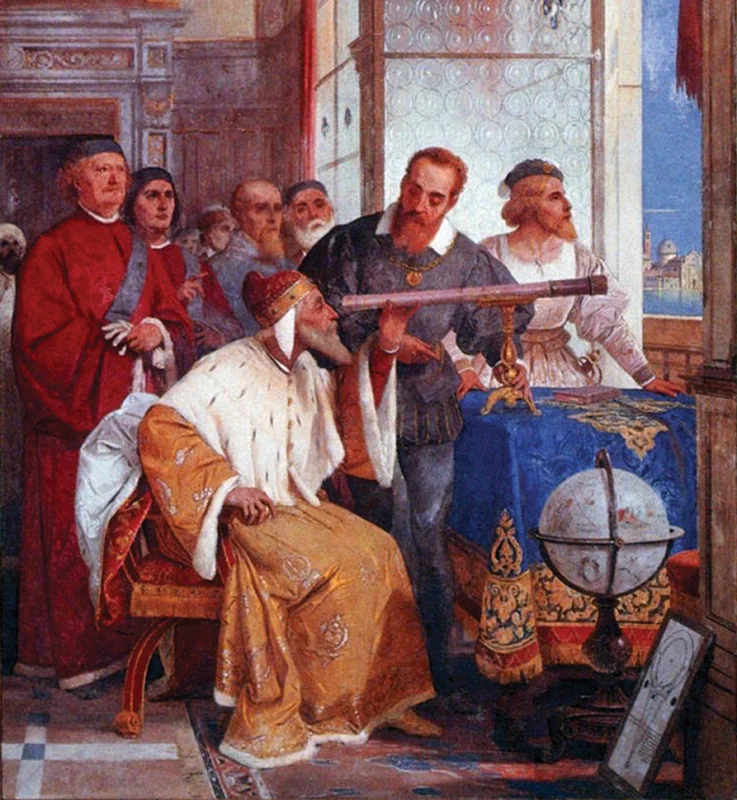 Villa Andrea Ponti - Varese - Italy
How Kepler and Galileo dismantled fourteen centuries of cosmic certainty.
Two men, working in different countries with different tools, finished what Copernicus had only begun. Within a single year — 1609 — the heavens stopped being a closed sphere and became something measurable.
Johannes Kepler’s Astronomia Nova, published in 1609, used Tycho Brahe’s pre-telescopic data to establish the first two laws of planetary motion: orbits are ellipses with the Sun at one focus, and a planet sweeps equal areas in equal times. The third law — relating orbital period to semi-major axis — followed in 1619. In the same year as the Astronomia Nova, Galileo turned a telescope on the sky and produced the observational confirmations that geocentrism could not survive: the phases of Venus, Jupiter’s moons, lunar mountains, sunspots. Together they completed the conceptual rupture Copernicus had begun a century earlier — and established observation and mathematics, not authority, as the arbiters of physical truth.
During his doctoral research at the Astronomical Observatory of Capodimonte (Naples), the author held in his hands one of the exceedingly rare first editions of Copernicus's De Revolutionibus Orbium Coelestium — one of the most consequential books in the history of science.
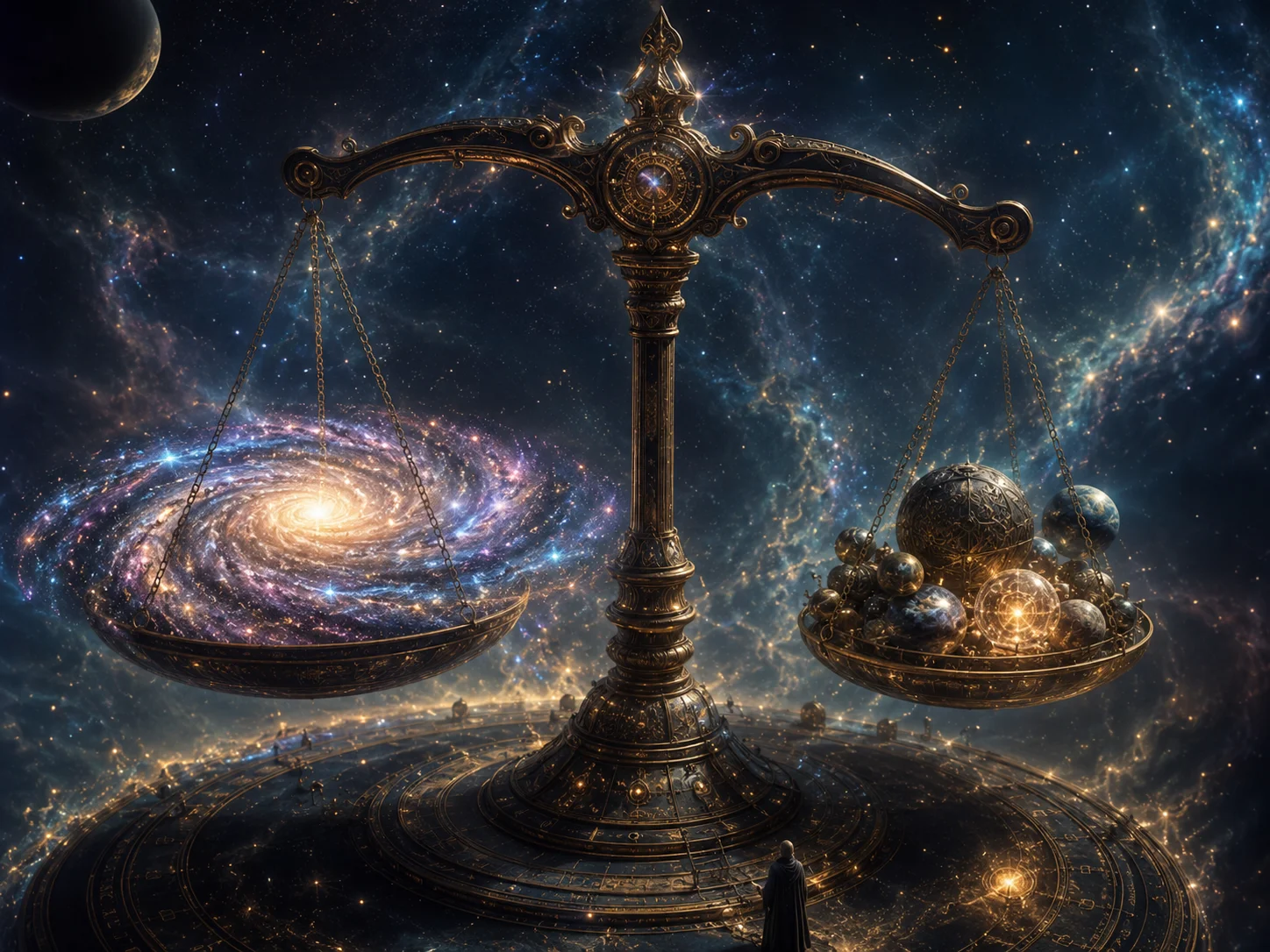 chatGPT by openAI
The question is poorly posed — and the answer is stranger than the question.
There is no scale large enough to weigh a galaxy. The methods we have invented instead reveal that most of the answer is something we cannot see.
Galactic masses are inferred indirectly — through the orbital velocities of stars and gas (rotation curves), through the bending of background light (gravitational lensing), through the motions of satellite galaxies. The pioneering work of Fritz Zwicky in the 1930s and Vera Rubin in the 1970s revealed that visible matter cannot account for the dynamics observed: galaxies must be embedded in vast haloes of dark matter. For the Milky Way the total comes to roughly 1.5 trillion solar masses, of which only 15% is ordinary matter — stars, gas, dust, everything that emits or absorbs light. The remaining 85% is invisible.
More than 85% of the mass in a typical galaxy is invisible — composed of dark matter that does not emit, absorb, or reflect light, yet whose gravitational influence governs the rotation of every star within.
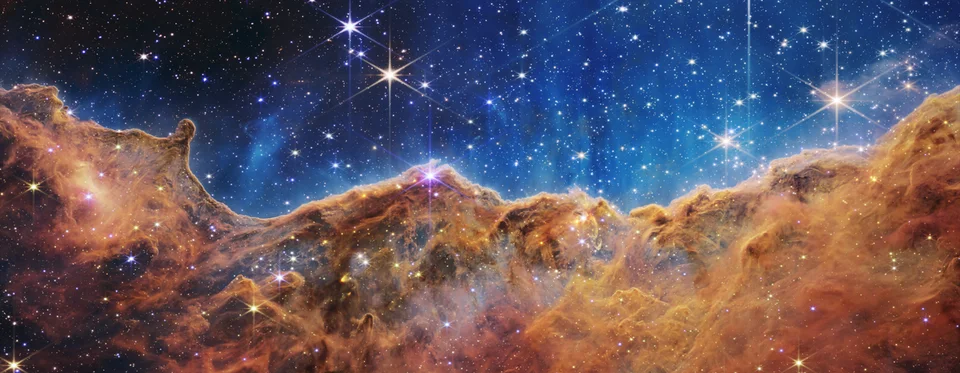 NASA · ESA · CSA · STScI
From the dust of molecular clouds to the light that reaches our telescopes.
Stars are not visible at the moment of their birth. To find one being made, we have to point a radio telescope at a place where, on the surface, nothing seems to be happening.
Stars form inside dense, cold globules of molecular gas embedded within giant molecular clouds, hidden from optical view by the dust around them. The presence of nearby massive O- and B-type stars drives an ionisation front into the cloud, sweeping away surrounding gas while compressing the dense globules. Once a globule’s mass and temperature pass the threshold for thermonuclear ignition — fifteen million kelvin — fusion begins and a star is born. The process is detectable mainly through radio emission from water and other molecules, which is how astronomers map the otherwise invisible nurseries that produce most of the stellar population we observe.
A single observation of a celestial object is like a photograph of a crowded street — to reconstruct the life history of its inhabitants, one must observe thousands of individuals at different stages.
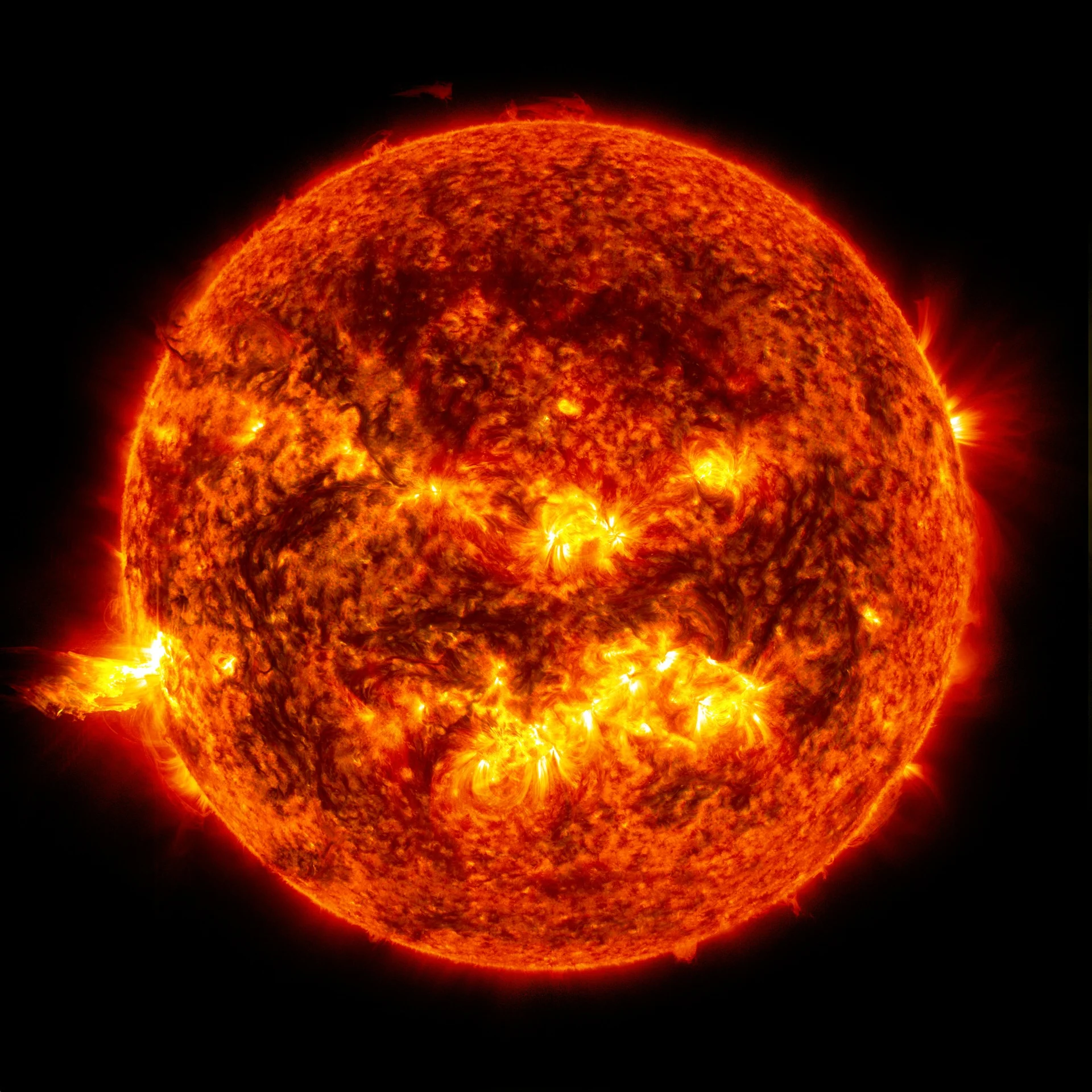 NASA / SDO
An extraordinarily complex star hiding behind an apparently simple glow.
The Sun appears to the eye as a featureless ball of light. A century of observation has shown it to be the most layered, most paradoxical star we will ever study at close range.
The Sun is a G2V yellow dwarf powered by hydrogen fusion in a 15-million-kelvin core, where the proton–proton chain converts mass into energy at a rate that has held steady for 4.6 billion years. Above the core, a radiative zone diffuses photons outward over hundreds of thousands of years, and a convective zone carries energy to the visible photosphere at 5,800 K. Beyond that lie the chromosphere and the corona — a tenuous, million-degree atmosphere whose paradoxical heat above the cooler photosphere remains one of the great unsolved problems in solar physics. Its proximity makes it the only stellar laboratory in which we can observe convection cells, sunspots, and coronal mass ejections in real time.
The proton–proton chain that powers the Sun requires temperatures of 15 million kelvin — achieved through the gravitational contraction of the primordial cloud from which the star was born.
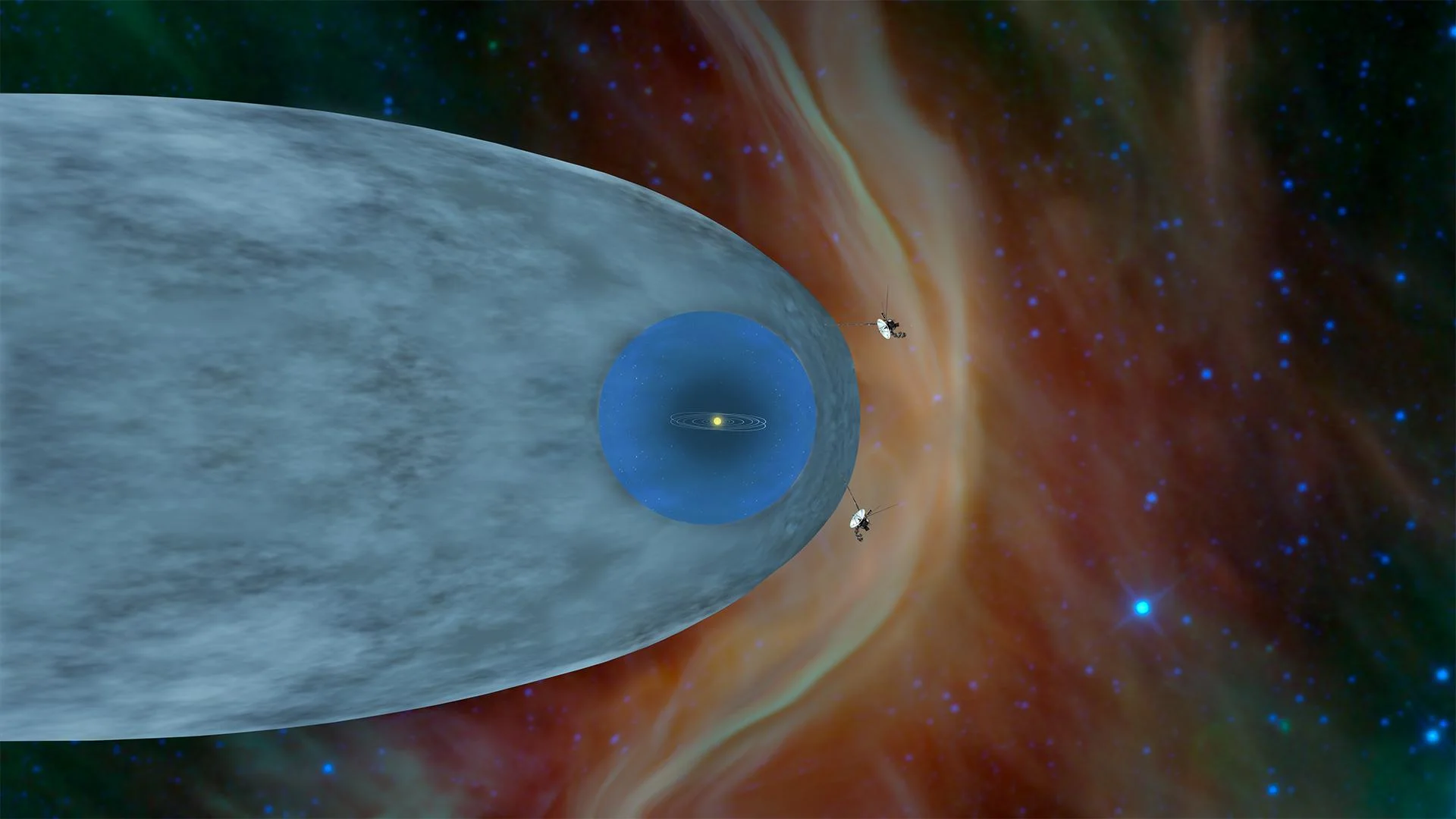 NASA / JPL-Caltech
Interstellar matter flows through our planetary system — and has for billions of years.
The Solar System is not sailing through empty space. It is moving through a cloud — and through that cloud's history.
The interstellar medium is profoundly inhomogeneous, broken into clouds of varying density, temperature, and composition that form and disperse over millions of years. The Sun has been embedded in the Local Interstellar Cloud for the last 250,000 years — a warm, tenuous, partially ionised cloud at about 7,000 K and 0.3 atoms per cubic centimetre — itself drifting through a far larger and hotter Local Bubble carved by ancient supernovae. Moving at roughly 26 km/s relative to the cloud, the Sun will leave it within 10,000 to 20,000 years. The heliosphere shields the inner planets from much of this flow — but not all of it.
Approximately 98% of the gas fraction within the heliosphere — the volume of space filled by the solar wind — consists of interstellar matter that has penetrated from outside.
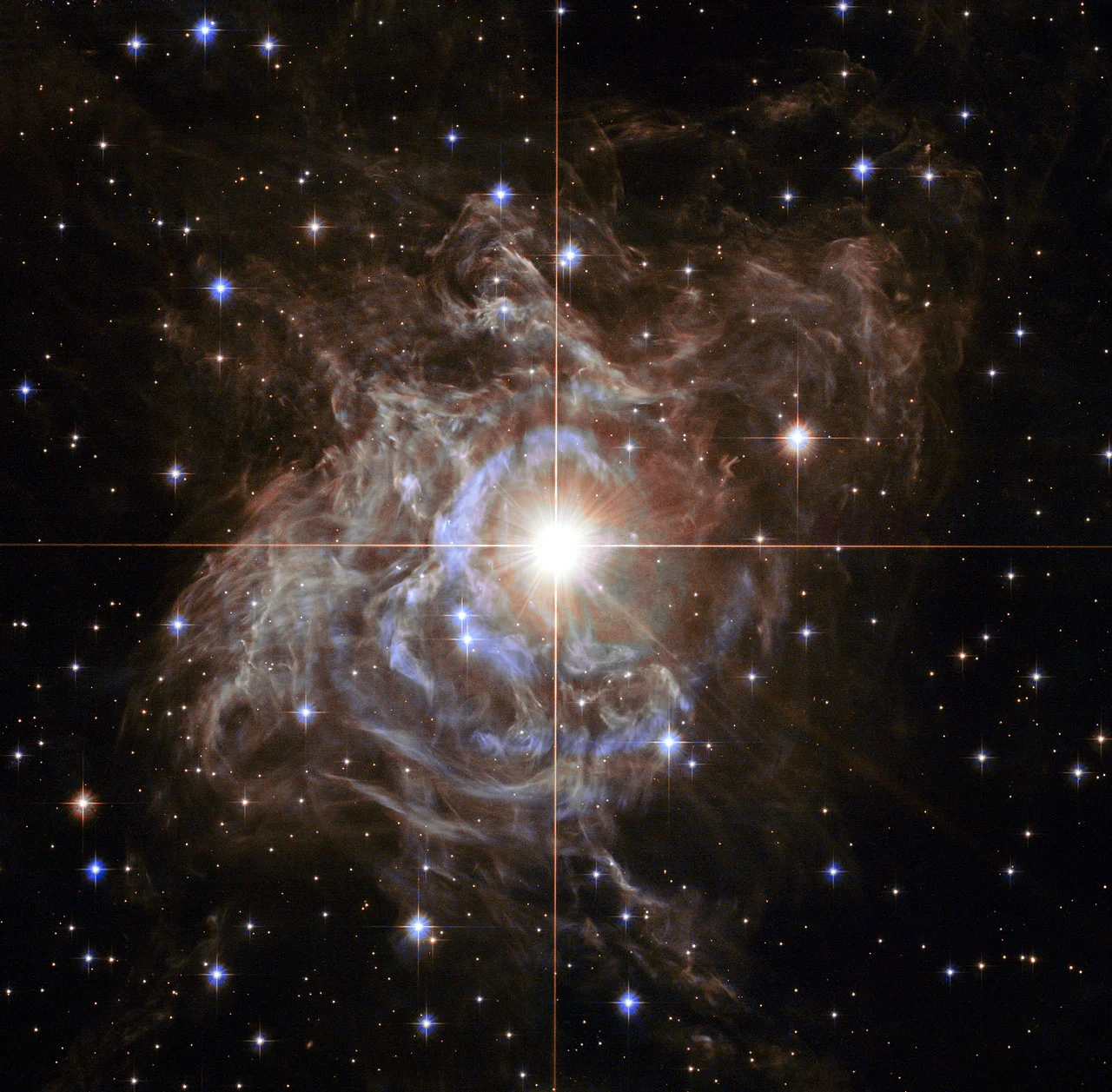 NASA · ESA · A. Riess (STScI/JHU)
Measuring the universe — one rung at a time.
Astronomy began as the art of estimating how far things are. The trick is that no single method works at every scale — so we built a ladder.
The cosmic distance ladder is a chain of overlapping techniques, each calibrated by the rung below. Stellar parallax, purely geometric, reaches a few thousand parsecs with Gaia’s precision. Cepheid variables — pulsating stars whose period correlates with intrinsic luminosity — extend the reach across nearby galaxies. Type Ia supernovae, with their nearly uniform peak brightness, push to billions of light-years. The ladder’s strength lies in redundancy; its weakness, in propagating systematic errors. Every refinement at the base improves our estimate of the Hubble constant — and through it, the age of the universe.
Cepheid variable stars — whose pulsation period is directly related to their intrinsic luminosity — serve as "standard candles" visible across tens of millions of light-years, forming one of the most critical rungs of the cosmic distance ladder.
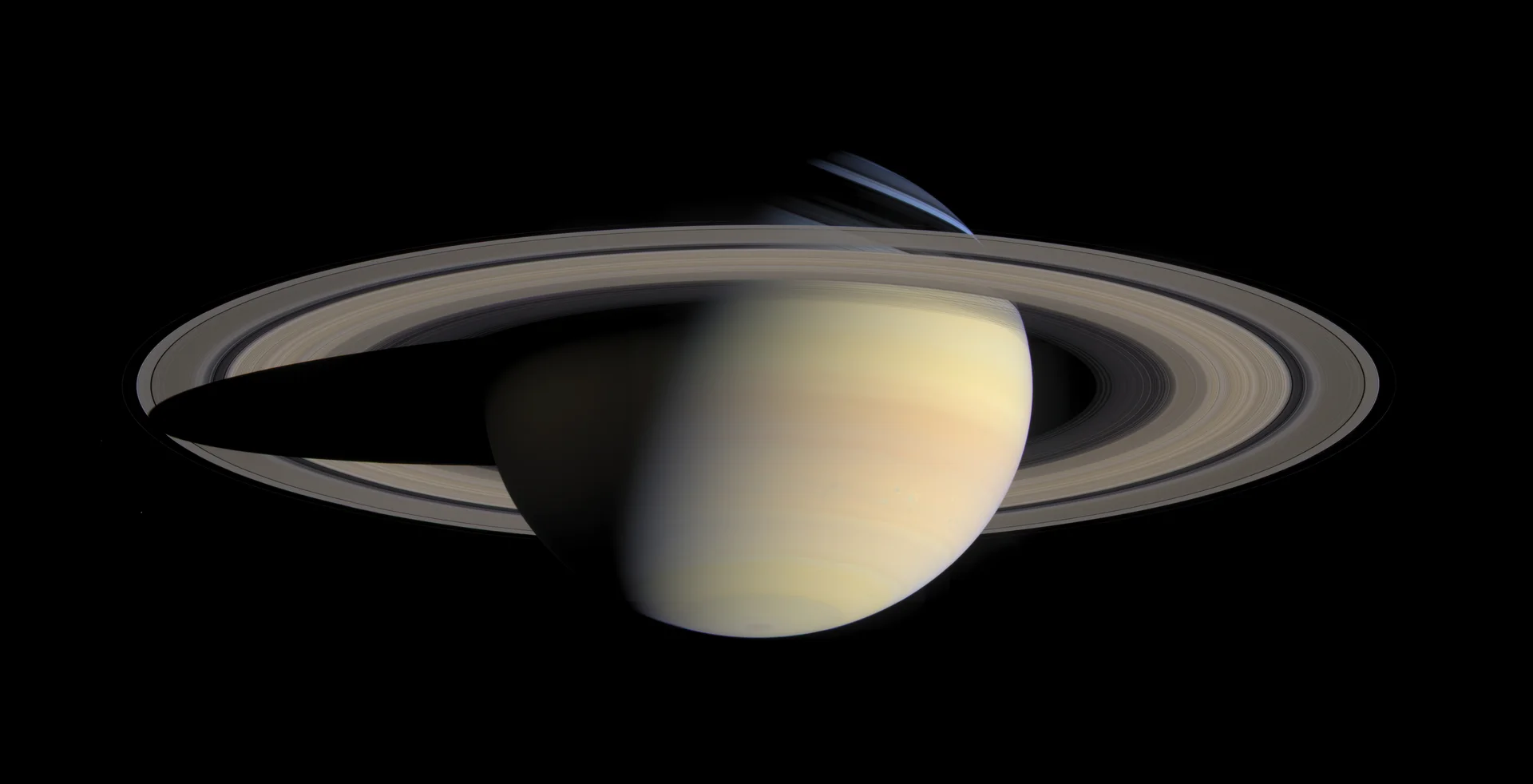 NASA / JPL-Caltech / Space Science Institute
A lost moon, a broken resonance, and a planet that devoured its own child.
The rings of Saturn look ancient and are not. Two unrelated mysteries about the planet — their youth and its tilt — turn out to share a single, violent answer.
Saturn’s bright water-ice rings are at most 100 to 200 million years old — far younger than the planet itself — and the planet’s 26.7° axial tilt is inconsistent with any current orbital resonance. A 2022 MIT study by Jack Wisdom and colleagues resolves both puzzles with a single event: an additional moon, named Chrysalis, destabilised some 160 million years ago, drifted past the Roche limit, and was tidally shredded. Its icy debris formed the rings. The loss of Chrysalis broke the resonance with Neptune that had previously locked Saturn’s tilt — leaving the planet with rings, an unexplained orientation, and the cosmic equivalent of having devoured its own child.
Chrysalis — a hypothetical former moon of Saturn — may have simultaneously given the planet its rings, its 26.7° axial tilt, and its liberation from an orbital resonance with Neptune.
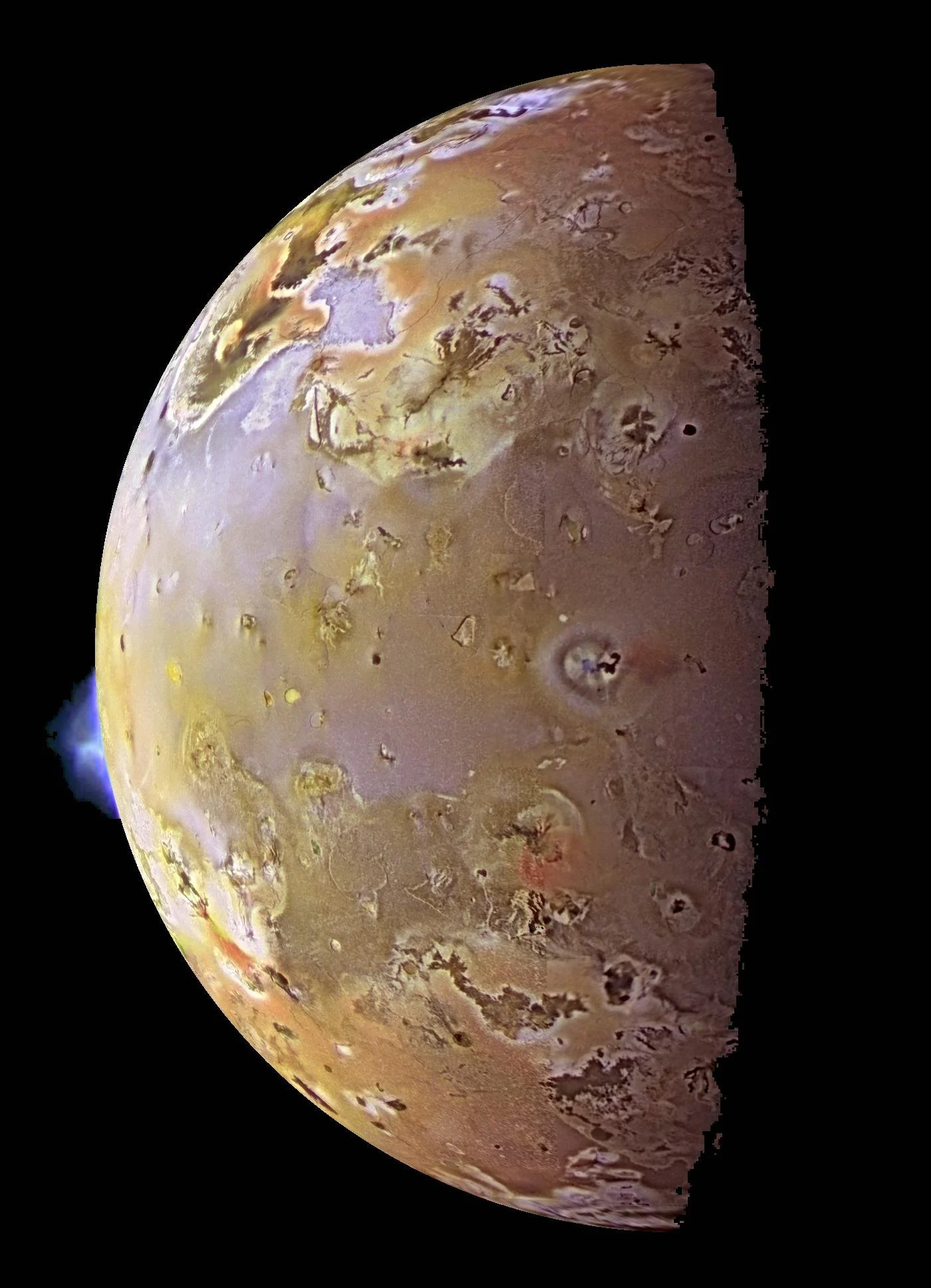 NASA / JPL
Named after the God of Fire — and found on worlds far beyond our own.
The conviction that Earth was the only living world geologically lasted as long as we had not looked closely. Voyager 1 ended it in three days.
Volcanism is not an Earthly peculiarity. Voyager 1’s 1979 flyby of Io revealed 80 active volcanoes powered by tidal heating from Jupiter, making it the most volcanically active body in the solar system. Mars hosts Olympus Mons — 25 km tall and 600 km wide, the largest volcano in the solar system — though its internal heat has long since waned. Venus, mapped through cloud by Magellan radar, conceals thousands of volcanic structures. Even small icy moons like Enceladus erupt — through cryovolcanism that vents water and organics from a subsurface ocean.
Io — Jupiter's innermost Galilean moon — possesses 80 active volcanoes whose eruptions launch sulphurous plumes hundreds of kilometres high, making it the most volcanically active body in the solar system.
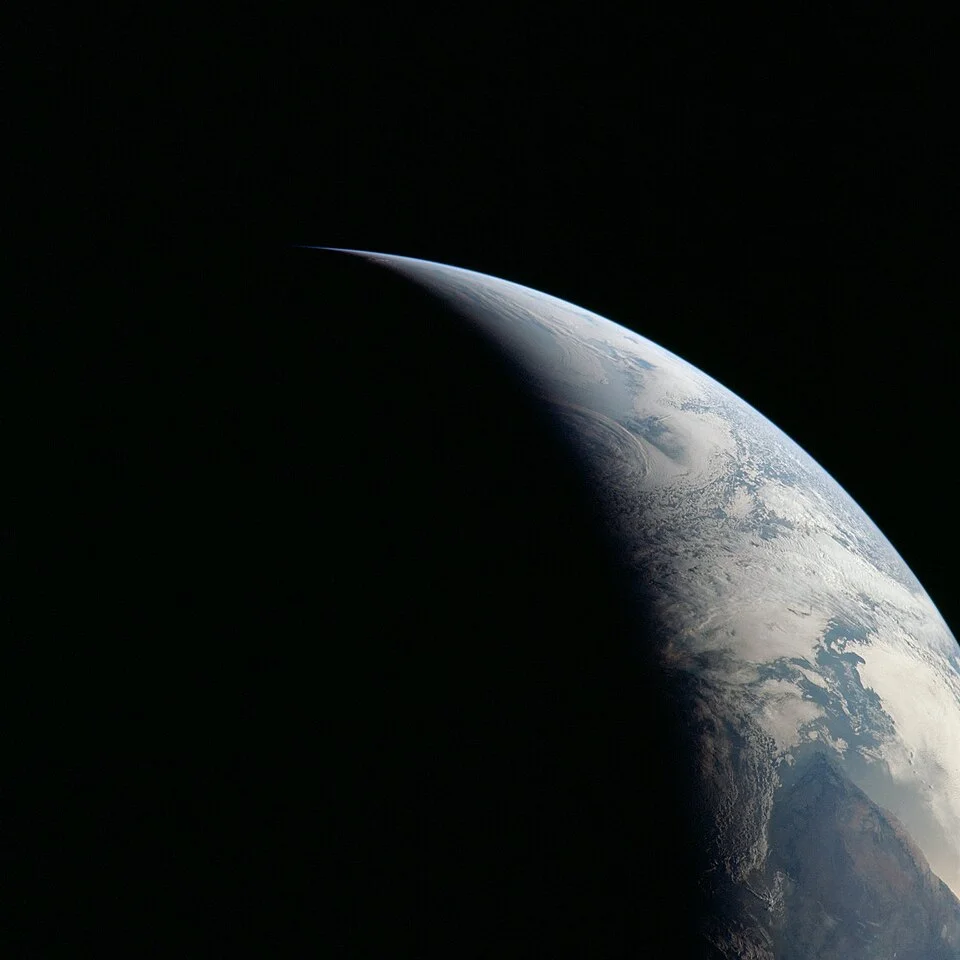 NASA on The Commons - Apollo 11 Mission Image - View of Earth terminator
The line that separates day from night — sweeping the Earth at 1,600 km/h.
Twice every day, a moving line crosses every place on Earth at the speed of a jet airliner. We see it as a sunrise. The Moon shows the same line in cleaner form.
The terminator is the geometric boundary where solar rays graze a planet’s surface tangentially — the dividing line between day and night. On Earth, atmospheric scattering smears it into a twilight zone, broken into civil, nautical, and astronomical phases as the Sun descends below the horizon. At the equator it sweeps the surface at 1,600 km/h. On airless worlds — the Moon, for instance — it remains razor-sharp, casting long shadows that reveal craters, mountains, and rilles in extreme relief through any small telescope.
At the equator, the terminator sweeps across the Earth's surface at approximately 1,600 km/h — its maximum velocity. You have witnessed its passage every sunrise and every sunset of your life.
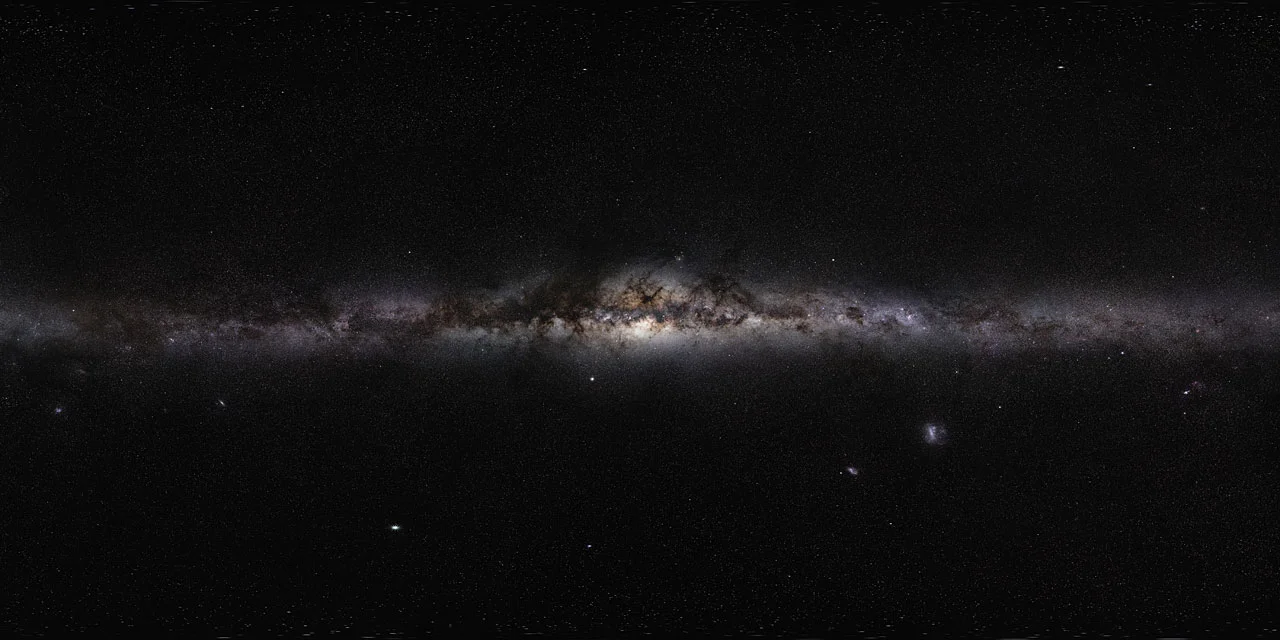 ESO / S. Brunier
Mapping a city from inside a foggy window.
We have always lived inside the Galaxy, never outside it. Drawing its map has been like sketching a metropolis from a single window — and the picture is still unfinished.
The Milky Way is a barred spiral galaxy roughly 100,000 light-years across, hosting more than 300 billion stars. Our Sun lies in the Orion Arm — a minor spur some 26,000 light-years from the centre, between the Perseus and Sagittarius arms. The galactic bulge spans 7,000 light-years and harbours roughly 10 billion mostly-old stars. At its very heart sits Sagittarius A*, a supermassive black hole of about four million solar masses around which the entire Galaxy rotates. Most of this geography was inferred indirectly through radio and infrared — the only wavelengths capable of piercing the dust that veils the galactic plane.
The Milky Way's bulge — a spheroidal concentration of 10 billion stars centred on the constellation Sagittarius — harbours a supermassive black hole of approximately four million solar masses.
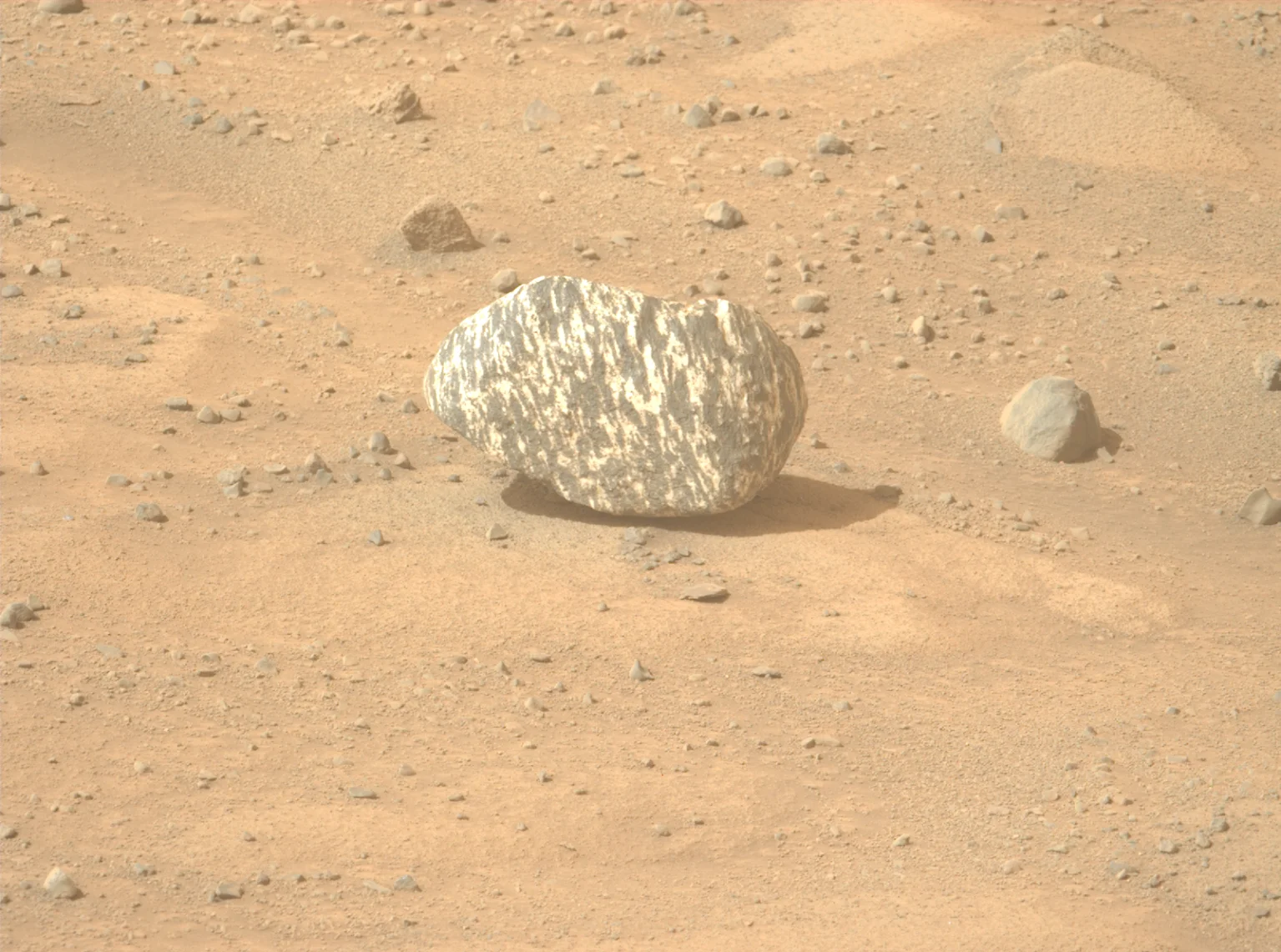 NASA/JPL-Caltech/ASU
How we proved that pieces of the Red Planet have been falling to Earth all along.
There are stones in our museums whose journey began on another world. The proof took twenty years to assemble — and one decisive measurement of trapped gas.
A small fraction of meteorites recovered on Earth — the SNC group, named after Shergotty, Nakhla, and Chassigny — display volcanic origin and ages young enough to rule out asteroid parents. The 1982 discovery of a confirmed lunar meteorite in Antarctica disproved the long-standing objection that ejecta could not escape such bodies. The decisive proof came in 1983, when Bogard and Johnson measured noble gases trapped in the glassy phase of Elephant Moraine A79001 — a perfect match for the Martian atmosphere as recorded by the Viking landers. We hold pieces of Mars in our hands.
In 1983, gases trapped in the glassy phase of the Elephant Moraine A79001 shergottite were found to match the Martian atmosphere exactly — as measured by the Viking landers.
 KEYSTONE/AP/CARIN ASHJIAN
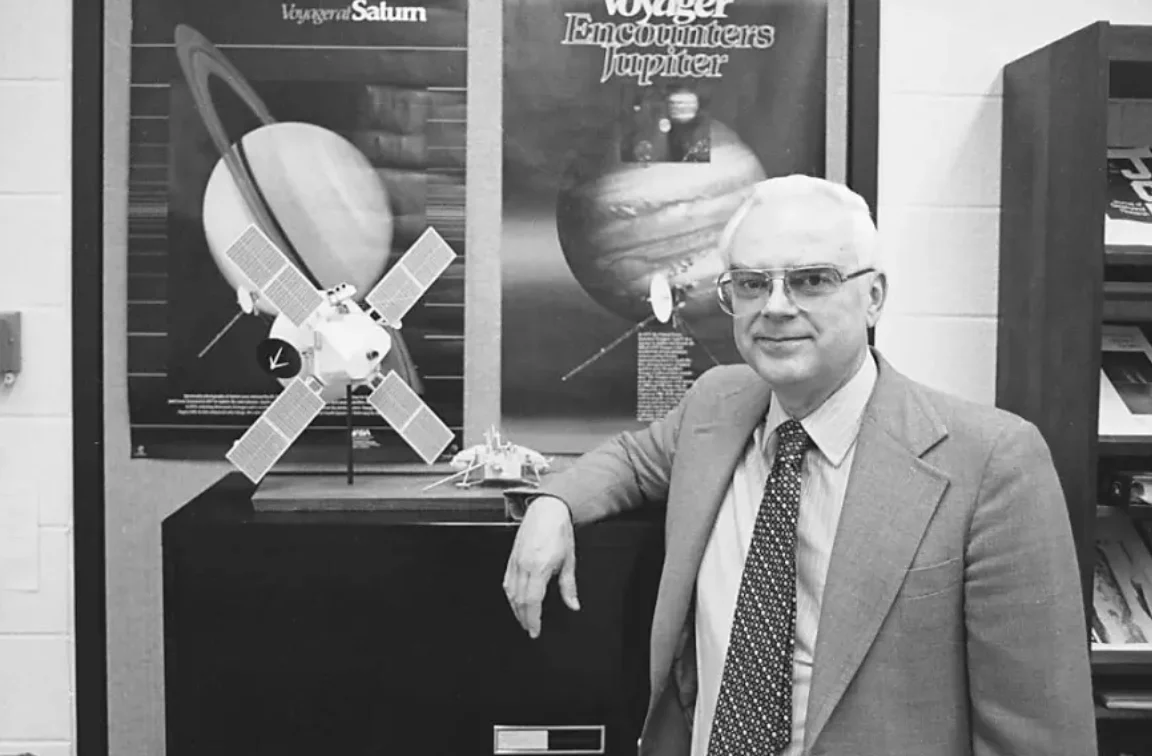
The man who dared to listen — and taught us how to ask the right question.
In 1960 a young astronomer pointed a radio telescope at two nearby stars and listened. He heard nothing. The act of listening, however, changed everything.
Frank Drake’s Project Ozma — conducted in 1960 at Green Bank with a 26-metre dish trained on Tau Ceti and Epsilon Eridani — was the first scientific search for radio signals from extraterrestrial intelligence. He had been inspired by Cocconi and Morrison’s 1959 Nature paper proposing the 21-cm hydrogen line as a natural interstellar communication channel. A year later, Drake distilled the question into a single equation that decomposed the probability of contact into a chain of factors: stars, planets, life, intelligence, technology, longevity. He died in 2022 leaving not an answer but the courage to ask.
The hydrogen 21 cm line — emitted at 1,420 MHz by the spin-flip transition of neutral hydrogen — occurs on average once every 10 million years per atom. Yet the sheer abundance of interstellar hydrogen makes it the brightest spectral line in radio astronomy ... and the frequency Drake chose for humanity's first deliberate listen.
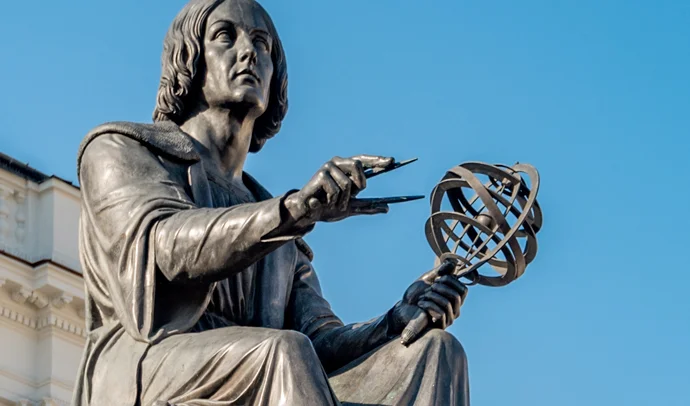 Tilman2007/Wikipedia
Five centuries of demotion — from the centre of creation to the periphery of a spiral arm.
For fourteen centuries the Earth sat at the centre of everything. The book that displaced it was printed the year its author died — and what it began still has not finished.
Copernicus’s De Revolutionibus Orbium Coelestium, published in 1543, dethroned the Earth as the centre of the cosmos and triggered a cascade of demotions that still continues. Tycho Brahe collected the data, Kepler turned them into elliptical orbits, Galileo confirmed them through his telescope, and Newton unified terrestrial and celestial mechanics. In the twentieth century, Shapley moved the Sun out of the Galactic centre and Hubble proved our Galaxy is one of billions. The cosmic microwave background later showed the universe has no centre at all.
While working on his doctorate at the Astronomical Observatory of Capodimonte in Naples, the author held in his hands one of the exceedingly rare surviving first editions of Copernicus's De Revolutionibus — printed in Nuremberg in 1543, the year of Copernicus's death.
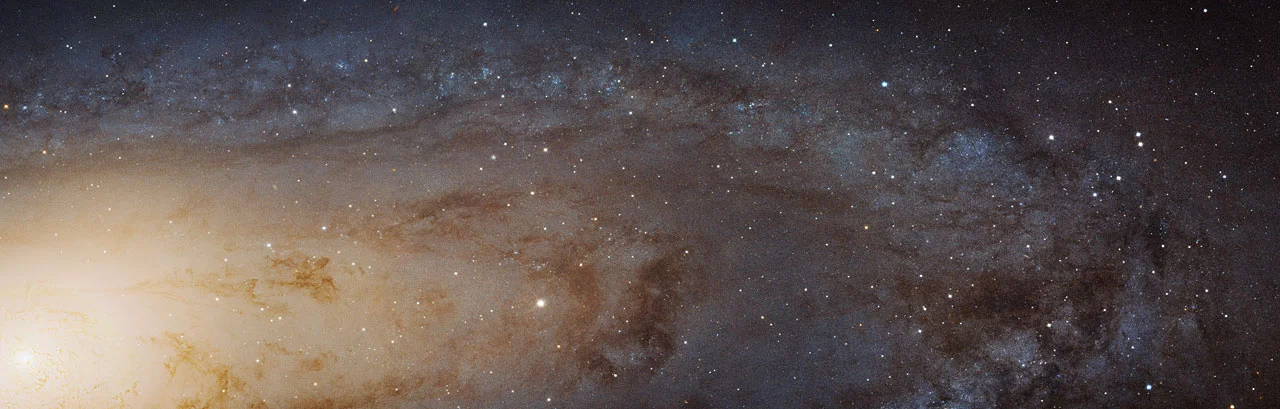 NASA · ESA · J. Dalcanton · B.F. Williams · L.C. Johnson (U. of Washington) · the PHAT team · R. Gendler
The nearest thing to a mirror the Milky Way has.
The brightest object beyond the Milky Way visible to the unaided eye looks like a smudge of light. It is also the only galaxy heading our way — and we have an appointment.
Andromeda — M31 — is a barred spiral galaxy 2.5 million light-years away, twice the mass of the Milky Way, hosting a supermassive black hole far larger than ours. Edwin Hubble proved in 1923 that this faint cloud is an entire galaxy beyond our own, ending the debate over the universe’s scale. Its Hubble Space Telescope mosaic resolves more than 100 million stars across a 61,000-light-year strip. In four to five billion years, M31 and the Milky Way will pass through each other and slowly merge into a giant elliptical, sometimes called Milkomeda.
Andromeda spans six full-Moon diameters on the sky — most of it too faint for the eye to catch.
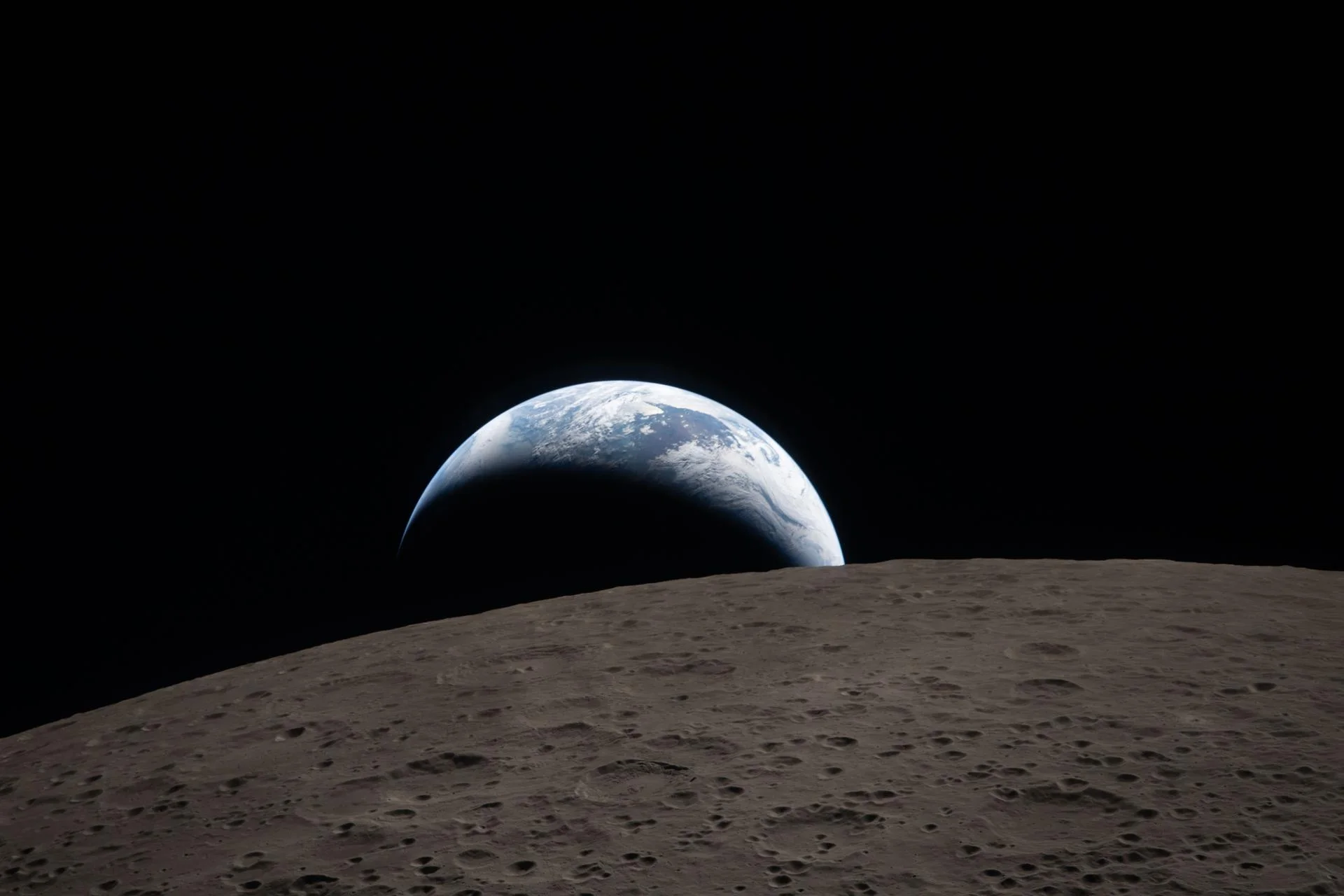 NASA
NASA
Fifty-four years of silence, then an Earthset.
Half a century after Apollo 17, four astronauts boarded a spacecraft pointed at the Moon — and discovered the silence behind it had been waiting for them.
Artemis II carried Reid Wiseman, Victor Glover, Christina Koch, and Jeremy Hansen on a nine-day flyby of the lunar far side in April 2026 — the first crewed mission beyond low Earth orbit since 1972. From 4,067 miles above the surface they witnessed an Earthrise, a fifty-four-minute total solar eclipse, and forty minutes of radio silence behind the Moon. The Avcoat heat shield, with a known erosion flaw inherited from Artemis I, held through Mach 35 reentry. Total distance traveled: 694,481 miles — a new human record.
At peak distance — 252,756 miles from Earth — Artemis II beat the Apollo 13 record by over 4,000 miles.